

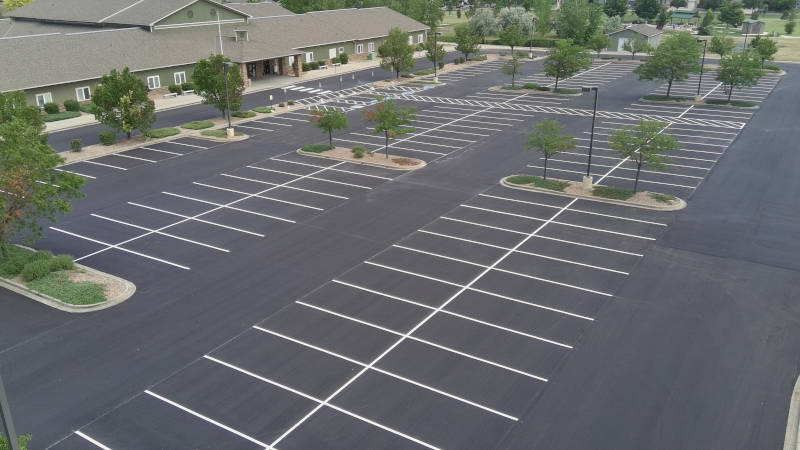
In most cases, yes. Restriping a parking lot in Denver typically triggers ADA upgrade obligations for the area you restripe. The U.S. Department of Justice generally treats restriping as an alteration, which means the accessible spaces in that lot usually must meet the current 2010 ADA Standards for Accessible Design once the work is done.
In plain terms, you typically cannot repaint a lot and leave non-compliant accessible stalls the way they were. When the striping goes back down, the handicap spaces, access aisles, and signage generally must match today’s rules, not whatever was painted years ago.
As a Denver parking lot striping contractor, we build ADA compliance into every restripe so a routine maintenance job does not quietly expose you to a complaint or fine.
Why Restriping Counts as an ADA Alteration
Restriping generally counts because the DOJ typically classifies it as an alteration to the parking facility, and alterations usually must comply with current accessibility standards. For most commercial lots, this is fairly settled ground.
The DOJ’s Business Brief on restriping states that when a business restripes a parking lot, it must provide accessible parking spaces that meet the ADA Standards. The agency also notes that because restriping is inexpensive, bringing spaces into compliance is almost always readily achievable.
“Readily achievable” is the legal test the ADA uses for existing facilities. It generally means a change that is easy to carry out without much difficulty or expense. Fresh paint and correct measurements typically clear that bar, so the obligation applies to nearly every restripe.
The same logic usually reaches resurfacing work. An asphalt overlay is generally considered an alteration, so a sealcoat and overlay project that ends in new striping typically carries the same ADA duty as a standalone restripe.
What ADA Upgrades Does Restriping Require in Denver?
Restriping typically requires the correct number of accessible spaces, compliant dimensions, proper access aisles, van-accessible stalls, and correct signage. Denver generally enforces the federal 2010 ADA Standards, so the requirements below usually apply across the metro.
Minimum Accessible Spaces by Lot Size
Your total stall count sets how many accessible spaces you need. This table comes straight from the DOJ standards:
| Total Spaces in Lot | Minimum Accessible | Van-Accessible |
|---|---|---|
| 1 to 25 | 1 | 1 |
| 26 to 50 | 2 | 1 |
| 51 to 75 | 3 | 1 |
| 76 to 100 | 4 | 1 |
| 101 to 150 | 5 | 1 |
| 151 to 200 | 6 | 1 |
| 201 to 300 | 7 | 1 |
| 301 to 400 | 8 | 1 |
| 401 to 500 | 9 | 2 |
| 501 to 1,000 | 2% of total | 1 per 8 accessible |
As a rule, at least one of every six accessible spaces must be van-accessible, and there must always be at least one van stall. Colorado generally follows this federal 1-in-6 ratio rather than imposing a stricter state count.
Dimension and Signage Requirements
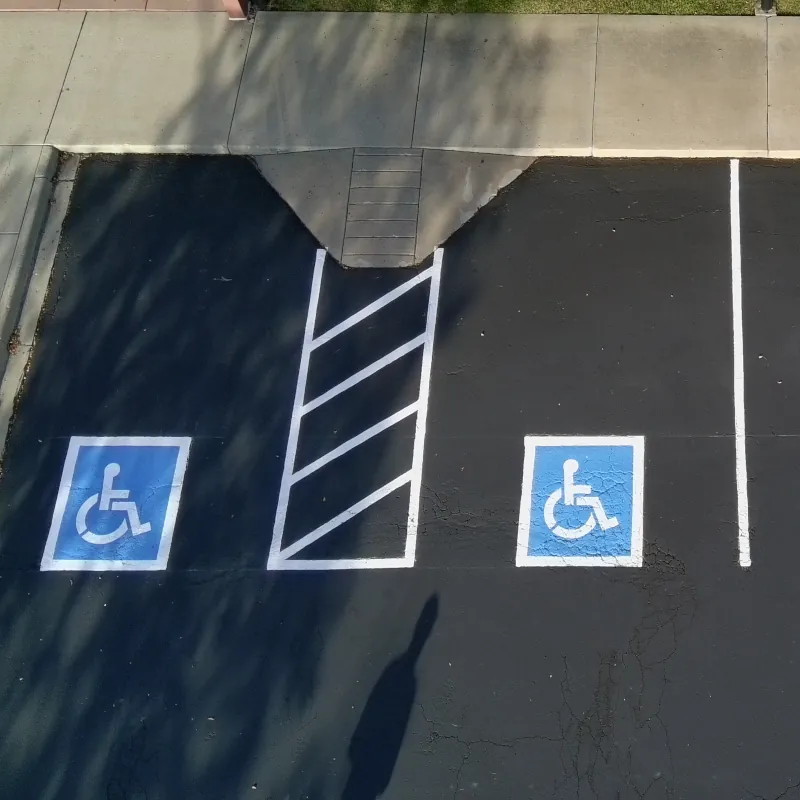
- Accessible space width: a minimum 96-inch-wide (8 foot) marked stall for car-accessible spaces.
- Access aisle: a 60-inch-wide striped aisle beside car spaces, and a 96-inch-wide aisle for van spaces to allow a wheelchair lift.
- Van clearance: a 98-inch minimum vertical clearance at the van space, its aisle, and along the vehicle route to it.
- Slope: the space and aisle must be level, with no more than a 1:50 (2%) slope in any direction, so a parked wheelchair does not roll.
- Signage: each space needs the International Symbol of Accessibility on a post-mounted sign, with an added “van accessible” sign at van stalls.
Getting the aisle width and slope right is where many older Denver lots fail. Our ADA striping crews measure and lay out every space to the current standard, and we add compliant ADA ramps and truncated domes where the route to the building needs them.
The Denver Factor: Why Timing Your Restripe Matters
Denver’s freeze-thaw cycles and expansive clay soils typically wear striping faster than milder climates, which means restripes usually come around often enough that ADA compliance should be part of your routine plan.
Paint on a Front Range lot fades under intense high-altitude UV and repeated snowplowing. The way Denver’s soil conditions shift and crack asphalt only speeds that wear, so most commercial lots need fresh striping every few years.
Each of those restripes is a fresh ADA trigger. Folding compliance into a parking lot maintenance plan means you upgrade on your own schedule instead of scrambling after a complaint or a failed inspection.
What Happens If You Restripe and Ignore ADA Rules?
Ignoring ADA rules during a restripe typically exposes you to federal complaints, civil penalties, and private lawsuits. For many businesses, the risk is real and rising.
Under the ADA.gov enforcement framework, first-offense civil penalties for a Title III violation can reach $75,000, and up to $150,000 for later violations. Private plaintiffs can also generally sue to force compliance and recover attorney fees.
Accessible parking is usually one of the most common targets for these claims because violations are easy to spot from the parking lot. A faded aisle or a missing van sign is visible to anyone, which typically makes a non-compliant restripe low-hanging fruit for a complaint.
How Enright Asphalt Keeps Your Restripe Compliant
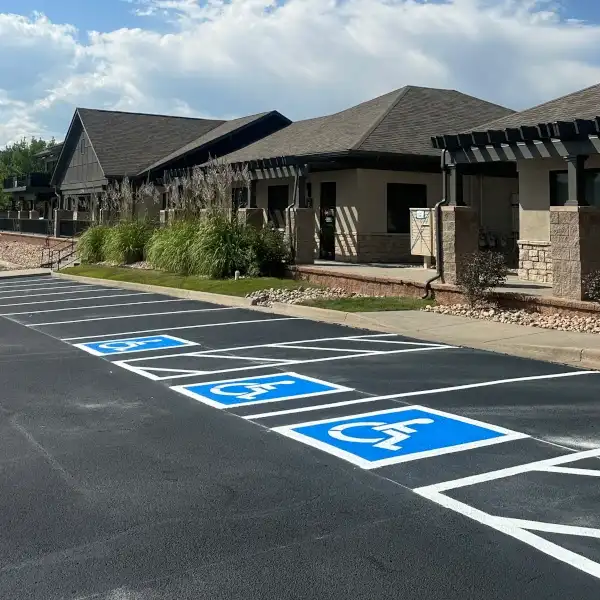
We treat every restripe as an ADA checkpoint, auditing the existing layout against current standards before the first line goes down.
- Count and verify. We confirm your total stall count sets the right number of accessible and van spaces.
- Measure the details. We check stall width, aisle width, slope, and signage against the 2010 ADA Standards.
- Correct the gaps. We reconfigure layout, add aisles, and install compliant signs and ramps where needed.
- Restripe to last. We apply durable traffic paint built for Colorado’s climate so the lines and compliance hold.
See how this plays out on real jobs in our Longmont striping recap, then contact our team for a free ADA review of your lot before your next restripe.
Frequently Asked Questions
Does sealcoating alone trigger ADA upgrades, or only restriping?
Sealcoating by itself does not restripe the lot, but the moment you repaint the lines afterward, the ADA alteration obligation generally applies to the restriped spaces. Since nearly every sealcoat job ends with fresh striping, it is usually wise to plan for compliance as part of the same project.
Do I have to upgrade the whole lot or just the accessible spaces?
The obligation typically attaches to the accessible parking in the area being restriped, not to every unrelated feature of the property. You generally must bring the handicap stalls, access aisles, and signage up to current standards, but a restripe does not usually force a full-site renovation on its own.
Who is legally responsible, the property owner or the tenant?
Both can generally be liable under ADA Title III. Landlords and tenants typically share responsibility for accessible parking, and the specific split is often set in the lease. When in doubt, the party ordering the restripe should confirm compliance rather than assume the other handles it.
How often do Denver parking lots need restriping?
Most commercial lots in the Denver metro typically need restriping every 2 to 3 years because high-altitude UV, snowplowing, and freeze-thaw cycles tend to fade paint quickly. Each restripe is usually a fresh chance to confirm ADA compliance before an issue arises.
Does adding EV charging stalls change my ADA parking count?
In most cases, yes. Accessible electric vehicle charging spaces generally carry their own layout and access-aisle rules that interact with your overall accessible count. If a restripe adds or rearranges EV stalls, the accessible spaces serving them should usually be planned into the design, not added as an afterthought.