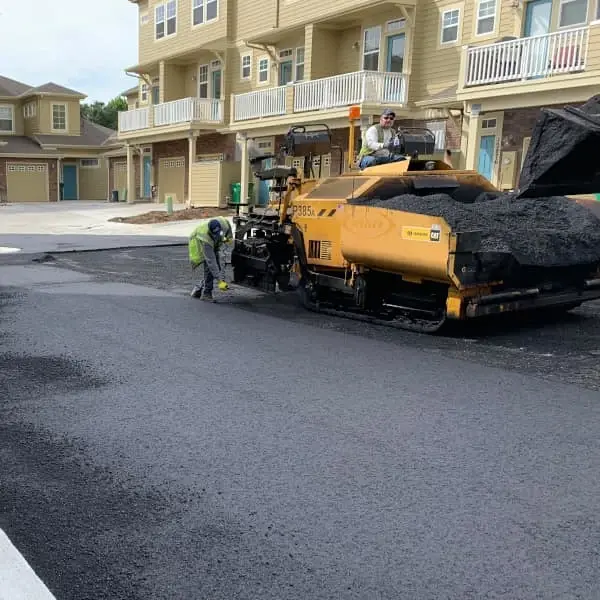

Enright Asphalt repairs cracked, potholed, and deteriorating asphalt driveways across Denver and the Front Range. A well-maintained asphalt driveway lasts 15 to 20 years. Without timely repairs, that number drops to 8 to 12 years. We fix the damage early so your driveway holds up through Colorado winters and you avoid a premature, full-scale driveway replacement.
We’ve worked on Denver-area asphalt for over 30 years. We hold an A+ BBB rating and our crews understand how altitude, UV intensity, and freeze-thaw cycling affect pavement in ways that don’t apply at lower elevations. You get repairs built for this specific climate, not a one-size-fits-all patch job. Browse all of our residential services to see how we help homeowners across the Front Range.
Small Repairs Now Save You Thousands Later
Asphalt damage in Denver doesn’t stay small for long. A hairline crack in April becomes a widened gap by November after months of UV oxidation, rain, and the first fall freeze. Water enters the crack, freezes overnight, expands by roughly 9%, and pushes the crack open further. Multiply that by 50 or more freeze-thaw cycles per winter, and a small crack becomes a pothole in a single season.
Timely crack sealing and patching costs a fraction of what you’ll spend on resurfacing or full replacement. Industry data shows that regular maintenance, including driveway sealcoating every 2 to 3 years and prompt crack repair, can extend asphalt lifespan by 50% or more. That’s real money staying in your pocket instead of going into a tear-out.
Keep Your Home Looking Sharp
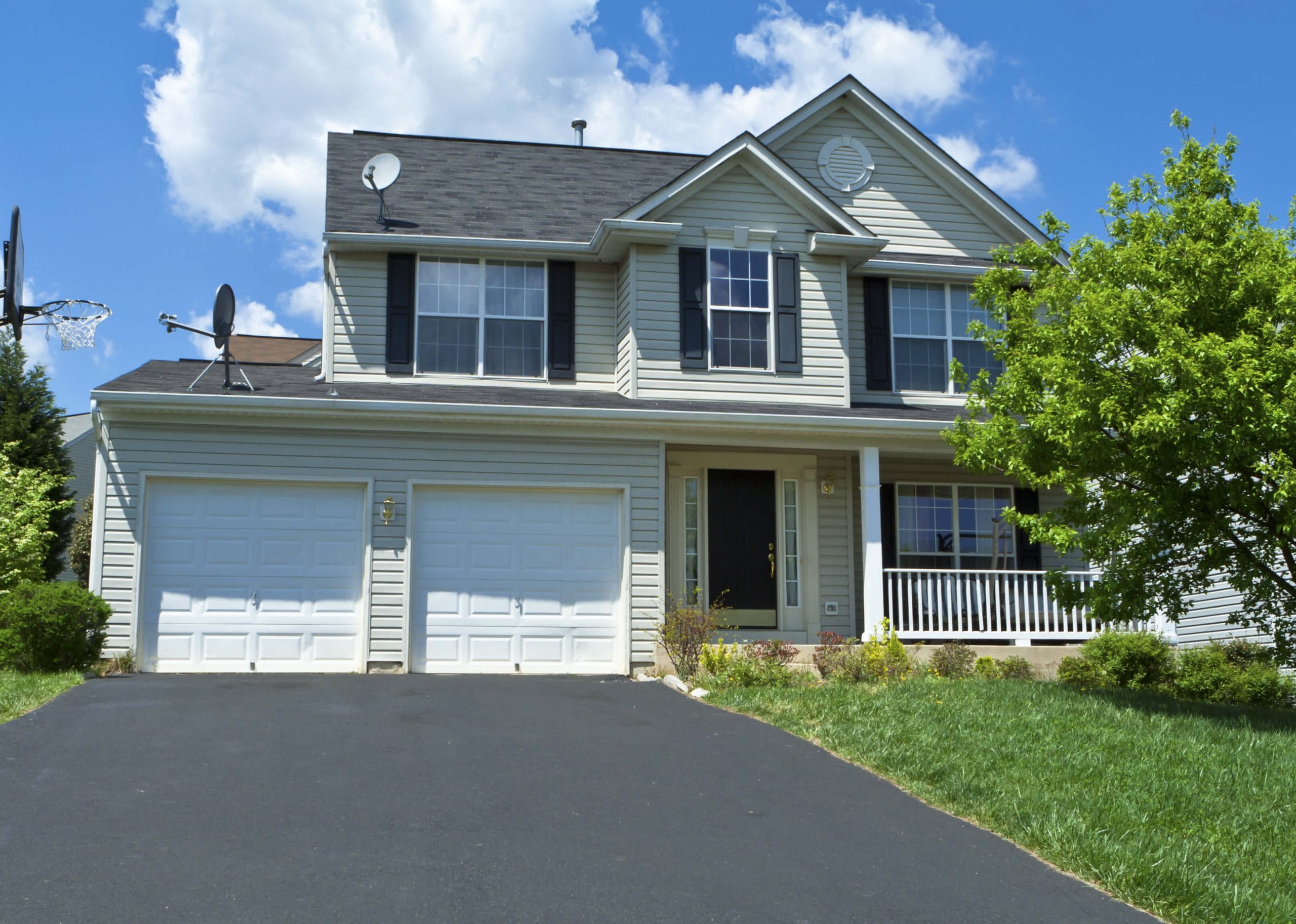
A smooth, dark asphalt driveway makes your entire property look well-kept. Cracks, potholes, and faded gray patches send the opposite message. Whether you’re planning to sell or just want your home to look its best, repairing your driveway is one of the most visible improvements you can make for the money.
Damaged asphalt is also a safety concern. Potholes catch heels and bicycle tires. Cracked edges crumble under car wheels. Uneven surfaces create trip hazards for kids, guests, and delivery drivers. Fixing these problems protects your family and reduces your liability as a homeowner.
Our Asphalt Driveway Repair Services in Denver, CO
We provide complete asphalt driveway repair in Denver, including:
- Hot-pour crack sealing for linear and branching cracks
- Pothole repair and patching with hot-mix asphalt
- Edge repair and rebuilding for crumbling driveway borders
- Surface patching for localized damage and depressions
- Alligator cracking repair (base failure assessment and stabilization)
- Drainage correction to stop water from pooling on or under the surface
- Sealcoating after repairs to lock out moisture and UV damage
- Full-depth patching for areas where damage extends through the asphalt layer
Whether you’ve got a single pothole near the garage apron or cracks running across the whole driveway, we match the repair method to the damage so you get a fix that lasts.
Common Asphalt Driveway Problems in Denver
Denver’s combination of high altitude, intense sun, and harsh winters creates a uniquely tough environment for asphalt. Here are the most common issues we see on residential driveways across the Front Range.
Cracking
Asphalt cracks for several reasons in Colorado. Freeze-thaw cycling is the biggest driver. Water enters tiny surface openings, freezes, expands, and forces the crack wider. UV radiation at 5,280 feet also oxidizes the asphalt binder faster than at lower elevations. As the binder dries out, the surface becomes brittle and cracks under normal traffic loads. Temperature swings of 40 to 50 degrees in a single day accelerate this process.
Potholes
Potholes form when water gets beneath the asphalt surface and weakens the base material. Traffic loads then push down on the compromised section, and pieces of asphalt break loose. In Denver, the freeze-thaw cycle is the main accelerator. Water expands when it freezes, breaks the bond between asphalt and base, and a pothole appears after just a few heavy cycles. Small potholes grow fast once they start.
Alligator Cracking
Alligator cracking looks like a web of interconnected cracks resembling reptile skin. This pattern usually signals a base or sub-base failure underneath the asphalt, not just surface wear. Clay soils common in the Denver metro area swell and shrink with moisture changes, undermining the structural support beneath your driveway. Alligator cracking almost always requires full-depth repair or section replacement to address the root cause.
Fading and Oxidation
Fresh asphalt is a rich, dark black. Over time, UV radiation breaks down the liquid asphalt binder that holds everything together. The surface fades to gray and becomes rough and brittle. At Denver’s elevation, UV intensity is measurably higher than cities at sea level. This means asphalt oxidizes faster here, making regular sealcoating more important in our market than in most.
Edge Deterioration
Driveway edges take extra abuse. Vehicles occasionally roll over them, landscaping equipment bumps against them, and water runs off the surface and erodes the soil supporting the edge. Over time, the edges crack, crumble, and pull away from the driveway. Edge repair restores structural support and prevents the damage from creeping inward toward the center of the driveway.
Repair Methods at a Glance
Different types of damage call for different repair approaches. Here’s a comparison of the most common methods we use:
| Repair Method | Best For | How It Works |
|---|---|---|
| Hot-Pour Crack Sealing | Linear cracks up to 1 inch wide | Heated rubberized sealant is applied into cleaned cracks, creating a flexible, waterproof bond |
| Surface Patching | Small potholes, depressions, localized damage | Damaged material is removed, hot-mix asphalt is placed and compacted to match the surrounding surface |
| Full-Depth Patching | Deep damage extending through the asphalt into the base | Asphalt and failed base material are removed, new base is compacted, and fresh hot-mix is laid and rolled |
| Edge Rebuilding | Crumbling or broken driveway borders | Deteriorated edges are cut back to solid material, base is reinforced, and new asphalt is placed and compacted |
| Sealcoating | UV protection, moisture barrier, appearance restoration | Coal-tar or asphalt emulsion sealer is applied over the entire surface after repairs are complete |
How We Repair Asphalt Driveways
A proper asphalt repair in Colorado means more than filling holes. Every step has to account for our altitude, temperature extremes, and soil conditions. Here’s our process:
- Inspect the entire driveway surface and edges. We identify every crack, pothole, soft spot, and drainage issue. We check for signs of base failure underneath, because a surface patch over a bad base won’t hold.
- Clean all damaged areas. We remove loose debris, vegetation, dirt, and old patching material from cracks and holes. Clean surfaces are essential for the repair material to bond properly.
- Assess and address base problems. If we find sections where the base has failed, like under alligator cracking or deep potholes, we excavate the damaged area, re-compact the sub-base, and rebuild from the bottom up. Skipping this is the number one reason asphalt repairs fail.
- Apply the right repair for each type of damage. Hot-pour sealant for cracks. Hot-mix asphalt patches for potholes and depressions. Full-depth removal and replacement for base failures. Edge rebuilds where borders have crumbled. We don’t use cold patch for permanent residential repairs because it doesn’t hold up to Denver’s climate.
- Compact all patched areas. Proper compaction is what separates a repair that lasts from one that breaks apart after the first winter. We use vibratory compaction equipment to achieve the right density.
- Sealcoat the repaired surface. After repairs cure, we apply a protective sealcoat to the entire driveway. This locks out moisture, blocks UV oxidation, and gives the driveway a clean, uniform black appearance. Sealcoating after repair is especially important at Denver’s elevation where UV exposure is stronger than at sea level.
We don’t use cold-patch material for permanent repairs. Cold patch is a temporary fix that shrinks, cracks, and comes loose within months, especially in Colorado’s temperature extremes. Every repair we do uses hot-mix asphalt for a lasting result.
What Affects Your Asphalt Driveway Repair Project
No two driveways have the same damage. Here are the factors that influence the scope and approach of your repair:
- Number, length, and width of cracks across the surface
- Number and depth of potholes
- Whether damage is surface-level or extends into the base layer
- Total area of driveway needing repair
- Current condition of the sub-base and drainage
- Age of the existing asphalt and level of oxidation
- Whether sealcoating is needed after repairs
- Site access and equipment staging
Every project is different. Call Enright Asphalt at 720-637-4960 for a free estimate so you know exactly what you’re getting into before any work starts.
Frequently Asked Questions
How long do asphalt driveway repairs last?
That depends on the type of repair and how well the driveway is maintained afterward. Hot-pour crack sealing typically lasts 3 to 5 years. Hot-mix patches and full-depth repairs can last 8 to 15 years or more when combined with regular sealcoating every 2 to 3 years. The key is addressing the root cause of the damage, not just the surface symptom.
When is the best time to repair an asphalt driveway in Denver?
Late spring through early fall is ideal. Hot-mix asphalt needs warm ambient temperatures to compact and bond properly. We schedule most residential asphalt repairs from May through October. Hot-pour crack sealing can sometimes be done in slightly cooler conditions, but warm weather always gives the best results.
Should I repair my driveway or replace it?
If cracks and potholes are limited to a few areas and the base is still solid, repair is the cost-effective choice. If alligator cracking covers large sections, the driveway has multiple sinking areas, or repair costs are approaching 30% of replacement cost, a full driveway replacement makes more financial sense. We’ll give you an honest assessment during your free estimate.
Why don’t you use cold patch for driveway repairs?
Cold patch is a temporary material that shrinks, loosens, and fails quickly, especially in Colorado’s temperature extremes. It’s fine for an emergency fill to get through the winter, but it’s not a permanent repair. We use hot-mix asphalt for every residential repair because it compacts properly, bonds to the existing surface, and holds up to freeze-thaw cycling.
Do I need to sealcoat after my driveway is repaired?
Yes. Sealcoating after repairs is one of the most important steps for long-term durability. It seals the repaired areas and the surrounding surface against moisture and UV damage. At Denver’s altitude, UV radiation breaks down unprotected asphalt faster than in most cities. Industry data shows that regular sealcoating every 2 to 3 years can extend asphalt lifespan by 50% or more.
How soon can I drive on my driveway after repairs?
For hot-mix patches, you can typically drive on the repaired areas within 24 to 48 hours depending on temperatures. Sealcoating needs 24 to 48 hours of dry curing time before vehicle traffic. We’ll give you specific timelines based on the work performed and current weather conditions.
Get a Free Asphalt Driveway Repair Estimate in Denver
Every crack and pothole left unrepaired gives water another entry point before Denver’s next freeze. The damage compounds with every cycle. Fixing it now is always less expensive than waiting.
Call Enright Asphalt at 720-637-4960 or fill out our estimate form to schedule your free, no-obligation assessment. We’ve been repairing and maintaining Denver driveways for over 30 years. We’ll inspect your driveway, explain your options, and give you a clear estimate before any work begins.