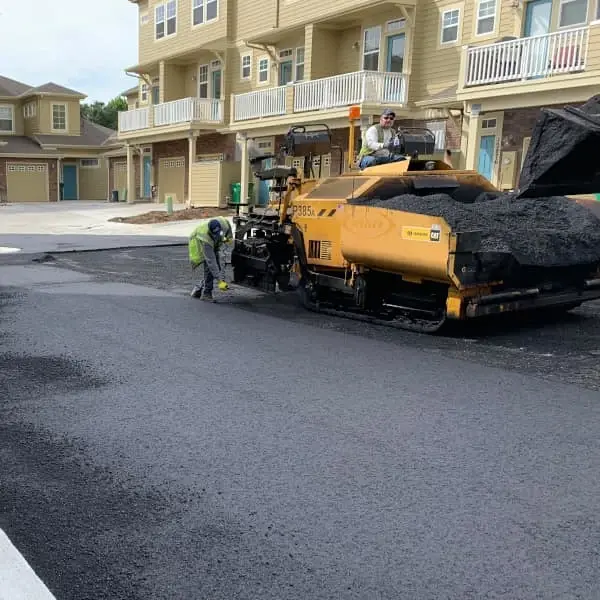

Enright Asphalt provides asphalt milling services for driveways, parking lots, roads, and commercial properties across Denver and the Front Range. Milling, also called cold planing, uses a specialized machine to grind and remove damaged asphalt to a precise depth without disturbing the base underneath. It’s the critical first step in most overlay and resurfacing projects, and it’s the most efficient way to correct grade problems, remove failed surface layers, and prepare pavement for a new top course.
We’ve been milling and paving in the Denver metro for over 30 years. We hold an A+ BBB rating and our crews operate precision milling equipment with automated depth and grade controls. Whether you manage a commercial parking lot or need your driveway prepped for resurfacing, we deliver a clean, uniform milled surface ready for the next step. Explore all of our asphalt paving services to see the full scope of what we handle.
Why Milling Comes Before Paving
You can pave directly over an existing surface in some cases, but milling first almost always produces a better, longer-lasting result. When you mill off the damaged top layer, you remove the cracked, oxidized material that would otherwise continue to deteriorate under the new surface. You also create a rough, textured profile that helps the new asphalt bond tightly to the old. That bond is what prevents the new layer from separating or delaminating over time.
Milling also maintains proper pavement elevation. Without it, every overlay adds height, which eventually creates problems at curbs, garage aprons, drainage inlets, and manhole covers. By removing the same thickness you plan to add, you keep everything at the correct grade. For commercial properties, this means ADA ramp slopes stay compliant and stormwater drainage continues to function.
Cost-Effective and Sustainable
Milling saves money in two ways. First, it avoids full-depth removal. Instead of tearing out the entire pavement structure and rebuilding from the base, you remove only the failed surface layer and replace it. According to the Asphalt Institute, mill and overlay projects can cost 40 to 50% less than full reconstruction.
Second, the material removed during milling doesn’t go to waste. It’s called reclaimed asphalt pavement, or RAP, and it’s one of the most recycled materials in the country. According to the National Asphalt Pavement Association, 93% of reclaimed asphalt is recycled back into new pavement. RAP is hauled to processing facilities, crushed, screened, and blended into new hot-mix asphalt at rates of 15 to 40% of the total mix. That reduces raw material demand and keeps thousands of tons of material out of landfills every year.
Our Asphalt Milling Services in Denver, CO
We provide milling services for a range of applications, including:
- Surface milling (1 to 2 inches) to remove oxidized, cracked, or raveled top layers before overlay
- Standard depth milling (2 to 4 inches) for moderate surface damage and grade correction
- Full-depth milling for complete asphalt removal down to the base or subgrade
- Precision grade milling to correct drainage slopes, cross-slopes, and elevation issues
- Butt-cut milling at transitions where new pavement meets existing surfaces, curbs, or structures
- Localized milling for targeted areas like utility trenches, failed sections, or intersection approaches
- Rumble strip milling for roadway safety features
- Parking lot milling with phased scheduling to keep portions of the lot open during work
We own and operate milling equipment sized for both residential driveways and large commercial surfaces. Our machines use automatic grade controls to hold depth tolerances within tight specifications.
How Asphalt Milling Works
Milling is a controlled, machine-driven process. Here’s what happens on a typical project:
- Survey the existing surface. We check pavement thickness, identify the depth of damage, locate utilities, and verify the target milling depth. For grade correction projects, we establish reference elevations and cross-slopes before the machine starts.
- Set up the milling machine. The machine uses a large rotating drum fitted with carbide cutting teeth. We calibrate the drum depth using automatic grade controls, lasers, or string lines depending on the project requirements. Modern milling equipment holds depth accuracy within approximately 5 millimeters of the target.
- Mill the surface. The drum grinds the asphalt as the machine moves forward at a controlled speed. Water is sprayed on the drum to manage heat and suppress dust. The milled material is picked up by a front-loading conveyor and deposited directly into haul trucks running alongside the machine.
- Haul and recycle the millings. Trucks transport the reclaimed asphalt pavement to a processing facility. The material is crushed, screened by aggregate size, and stockpiled for blending into new hot-mix asphalt. Nothing from your milled surface goes to a landfill.
- Clean the milled surface. After the machine passes, we sweep the area to remove loose debris, dust, and small aggregate particles. A clean milled surface is essential for proper tack coat adhesion when the overlay goes down.
- Inspect and verify. We check the finished depth, grade, and cross-slope across the milled area. Any spots that didn’t reach target depth or that revealed base problems get flagged before paving begins.
For most residential driveways, milling takes a few hours. Parking lots typically take 1 to 2 days depending on area. The milled surface can handle traffic temporarily, but it’s not a permanent driving surface. Overlay should follow as soon as scheduling allows.
Milling Depth Guide
The right milling depth depends on what you’re trying to accomplish. Here’s a guide to common depths and their applications:
| Milling Depth | Classification | Common Applications |
|---|---|---|
| 0.5 to 1 inch | Micro milling / surface correction | Smoothing ride quality, removing minor surface irregularities, leveling ruts |
| 1 to 2 inches | Surface milling | Removing oxidized top layer before overlay, standard residential driveway prep |
| 2 to 3 inches | Standard milling | Removing moderate damage, grade correction, most commercial mill-and-overlay projects |
| 3 to 4 inches | Deep milling | Removing multiple asphalt lifts, addressing deeper cracking, preparing for thicker overlay |
| Full depth | Complete removal | Removing all asphalt to the base or subgrade when base reconstruction is required |
The Federal Highway Administration recognizes five classes of cold planing, from removing surface irregularities (Class I) through milling to different depths at different locations (Class V). We select the approach that matches your project’s engineering requirements and budget.
When Your Pavement Needs Milling
Milling is the right step in several common scenarios. Here are the conditions that call for it:
Before an Overlay or Resurfacing
This is the most common use. Milling removes the failed top layer and creates a bonding surface for the new asphalt. It also maintains correct elevation at curbs, structures, and drainage points. If you’re planning a mill-and-overlay project, milling and asphalt resurfacing are typically completed in sequence within a few days.
Grade and Drainage Correction
When water pools on your parking lot or driveway because the surface has settled unevenly, milling can restore proper slope. By removing more material in high spots and less in low areas, we re-establish the cross-slope needed for drainage. This is often less expensive than tearing out the entire surface.
Elevation Adjustments
Pavement that’s built up too high at curbs, garage aprons, or building entrances creates tripping hazards and drainage problems. Milling brings the surface back to the correct elevation. This is common on properties that have been overlaid multiple times without milling in between.
Utility Work and Trench Restoration
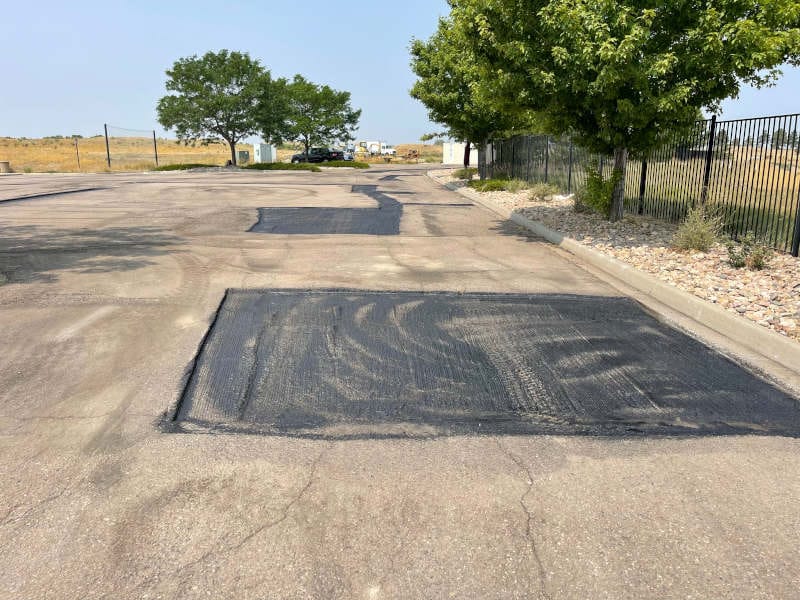
After underground utility repairs, the affected pavement needs to be restored cleanly. Milling the area around the trench creates a defined, square-edged cutout that produces a much cleaner asphalt patch than simply filling the trench. The result is a smoother surface and a stronger repair.
Partial Pavement Removal
Sometimes only a section of pavement has failed while the rest is still sound. Milling lets us remove just the damaged area to a controlled depth, then replace it with fresh hot-mix. This targeted approach saves money compared to removing and replacing the entire surface.
Milling in Denver’s Climate
Denver’s environment affects how and when we mill:
- UV oxidation at 5,280 feet breaks down asphalt binder faster than at lower elevations. Milling removes this brittle, oxidized layer so the new surface starts fresh.
- Freeze-thaw cycling causes surface cracks that deepen each winter. Milling removes the damaged material down to sound asphalt, giving the overlay a solid foundation.
- Denver’s dry air means less moisture interference during milling, which is an advantage. Dust suppression with water is still necessary, but we don’t face the humidity-related issues that affect milling in wetter climates.
- Clay soils in the Denver metro can cause uneven settlement. Milling exposes any base problems so they can be addressed before the overlay. Paving over hidden base failures leads to premature cracking.
- Temperature swings of 40 to 50 degrees in a single day mean we plan milling and paving in tight sequence. We don’t want a milled surface sitting exposed through large temperature cycles longer than necessary.
What Affects Your Milling Project
Every milling job has different requirements. Here are the main factors:
- Total area to be milled (square footage)
- Milling depth required
- Whether the project includes overlay or is milling only
- Grade correction or slope adjustment requirements
- Number and type of structures in the milling area (manholes, inlets, curbs, utilities)
- Accessibility for milling equipment and haul trucks
- Phasing needs for parking lots or roads that must stay partially open
- Hauling distance to the RAP recycling facility
- Time of year and coordination with paving schedule
Every project is different. Call Enright Asphalt at 720-637-4960 for a free estimate so you know exactly what you’re getting into before any work starts.
Frequently Asked Questions
What is asphalt milling?
Asphalt milling, also called cold planing, is the process of grinding and removing the top layer of asphalt pavement to a controlled depth using a machine with a rotating carbide-tipped drum. It prepares the surface for a new overlay, corrects grade issues, or removes failed pavement. The removed material is recycled into new asphalt.
How deep can you mill?
Our equipment can mill from a half inch for micro surface correction up to full-depth removal of the entire asphalt layer. Most residential and commercial projects call for 1 to 3 inches. The right depth depends on how deep the damage extends and what comes next, whether that’s an overlay, a patch, or a full rebuild.
Can I drive on a milled surface?
Yes, temporarily. A milled surface is drivable, but it’s rough and not designed as a permanent driving surface. Ride quality is poor, and the exposed texture collects water. We recommend scheduling the overlay as soon as possible after milling. On most projects, paving follows within 1 to 3 days.
Is milling necessary before every overlay?
Not always, but it’s recommended in most cases. Milling removes damaged material, creates a strong bonding surface, and maintains correct elevation. Direct overlay, where new asphalt is placed over the existing surface without milling, can work when the old surface is in decent shape and elevation isn’t a concern. We’ll recommend the right approach for your situation.
What happens to the old asphalt?
It gets recycled. The milled material, called reclaimed asphalt pavement or RAP, is transported to a processing facility where it’s crushed, screened, and blended into new hot-mix asphalt. According to the National Asphalt Pavement Association, 93% of reclaimed asphalt is recycled. Asphalt is one of the most recycled materials in the country.
How long does milling take?
A typical residential driveway can be milled in a few hours. Small to mid-size parking lots usually take 1 to 2 days. Larger commercial projects may take several days depending on area, depth, and phasing requirements. We coordinate milling and paving schedules so there’s minimal gap between the two.
Get a Free Asphalt Milling Estimate in Denver
Whether you’re prepping a driveway for resurfacing or milling a parking lot before a full overlay, the quality of the milling determines the quality of the finished surface. Get it right at this step and everything that follows performs better.
Call Enright Asphalt at 720-637-4960 or fill out our estimate form to schedule a free assessment. We’ve been milling and paving Denver pavement for over three decades. We’ll evaluate your surface, recommend the right approach, and give you a clear estimate before any work begins.