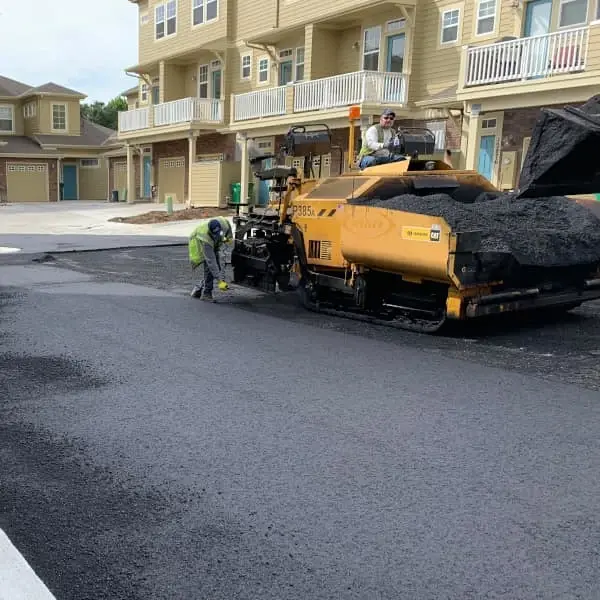

Enright Asphalt tears out and replaces failing asphalt driveways for homeowners across Denver and the Front Range. When your driveway has more patches than original surface, when alligator cracking covers large sections, or when the base underneath has given out, a full replacement is the only fix that lasts. We handle every step, from demolition through final sealcoat, with hot-mix asphalt built for Colorado conditions.
We’ve been paving and replacing driveways in the Denver metro for over 30 years. We hold an A+ BBB rating and our crews know what it takes to build asphalt that holds up at altitude. You get a driveway designed for Denver’s UV intensity, freeze-thaw pressure, and clay soils, not a generic install from a crew passing through town. See all of our residential services to learn how we help homeowners across the Front Range.
When Replacement Makes More Sense Than Another Repair
A properly installed asphalt driveway lasts 15 to 20 years with regular maintenance. With excellent care, including driveway sealcoating every 2 to 3 years and prompt crack repair, some driveways push past 25 years. But once the base has failed or damage covers more than a third of the surface, patching becomes a losing game. You spend money on repairs that break down within a season or two because the foundation underneath can’t support them.
Replacement gives you a new gravel base, proper grading for drainage, fresh hot-mix asphalt at the right thickness, and a sealed surface. That resets your driveway’s lifespan to day one. The upfront cost is higher than a patch, but you stop the cycle of spending on fixes that don’t hold.
A Fresh Driveway Changes Everything
A new asphalt driveway is one of the most visible improvements you can make to your property. That smooth, jet-black surface makes the whole front of your home look sharper. If you’re planning to sell, a worn-out driveway full of cracks and patches is one of the first things buyers notice. A new one removes that objection before it ever comes up.
Beyond appearance, a replacement eliminates the potholes, uneven surfaces, and crumbling edges that create safety hazards. No more tripping risks for your family or guests. No more water pooling against your garage. You get a level, properly drained surface that works the way it should.
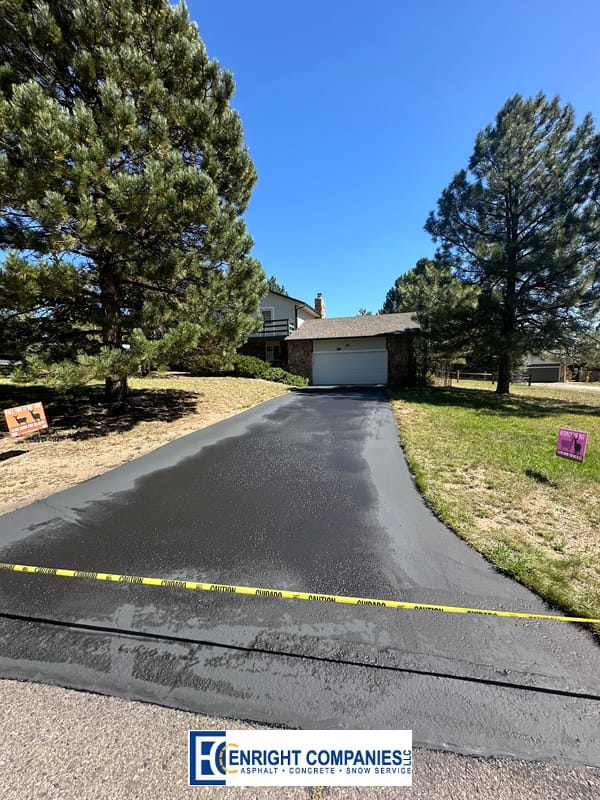
Our Asphalt Driveway Replacement Services in Denver, CO
We manage every phase of your driveway replacement in-house, including:
- Complete tear-out and removal of existing asphalt
- Sub-base excavation, grading, and compaction
- Drainage evaluation and correction
- Gravel base installation (4 to 8 inches of compacted aggregate depending on soil conditions)
- Hot-mix asphalt paving in proper lifts for density and strength
- Multi-pass compaction with vibratory and steel-wheel rollers
- Transition grading at garage aprons, sidewalks, and street connections
- Post-cure sealcoating to protect against UV oxidation and moisture
Whether you’re replacing a basic two-car driveway or a larger approach with curves and turnaround areas, we build it to match your property and your daily use.
Signs Your Asphalt Driveway Needs Replacement
Not every worn driveway needs a tear-out. But when multiple signs from this list show up together, replacement is almost always the smarter investment.
Alligator Cracking Across Large Areas
Alligator cracking, the web-like pattern that looks like reptile skin, is the clearest signal of base failure. It means the structural layers beneath the asphalt can no longer support traffic loads. Patching over alligator cracking is temporary at best. The cracks return because the problem is below the surface, not on it.
Multiple Potholes That Keep Coming Back
A single pothole can be patched. But when potholes keep forming in different spots, or patched potholes reopen after one winter, the base is compromised. Water is getting underneath the asphalt layer, freezing, and destroying the foundation. New patches on a bad base are just buying time. If yours aren’t that far gone yet, asphalt driveway repair may be the better route.
Extensive Fading and Surface Raveling
When asphalt turns light gray and loose aggregate starts shedding from the surface, the binder that holds everything together has broken down. At Denver’s 5,280-foot elevation, UV radiation accelerates this oxidation faster than at lower altitudes. Once the binder is gone, sealcoating won’t bring it back. The asphalt has reached the end of its usable life.
Poor Drainage and Standing Water
If water pools on your driveway after rain instead of running off, the surface has lost its proper slope. This happens when sections settle unevenly or when the original grading was inadequate. Standing water is the fastest way to destroy asphalt. It seeps into every crack, freezes, and accelerates damage through the entire slab. Regrading requires tearing out the existing surface.
Age Beyond 20 Years With Visible Deterioration
If your driveway is 15 to 20 years old or older and showing several of these symptoms, the math shifts toward replacement. Industry data shows asphalt driveways typically last 15 to 20 years. In Denver’s demanding climate, driveways that skipped regular sealcoating often fail closer to the lower end of that range.
Asphalt Thickness and Structure Options
The right driveway structure depends on what you park on it and what’s underneath it. Here’s a quick comparison of common residential configurations:
| Configuration | Asphalt Thickness | Best For |
|---|---|---|
| Standard residential | 3 to 4 inches of hot-mix over 4 to 6 inches compacted gravel base | Cars, SUVs, and light trucks on stable soil |
| Heavy-duty residential | 4 to 5 inches of hot-mix over 6 to 8 inches compacted gravel base | Trucks, trailers, RVs, or problem soils |
| Full-depth asphalt | 5 to 6 inches of hot-mix (no separate gravel base) | Well-compacted subgrade where aggregate base isn’t needed |
| Overlay (over existing base) | 1.5 to 2 inches of hot-mix surface course | Sound existing base that only needs a new surface |
According to the National Asphalt Pavement Association, 1 inch of hot-mix asphalt provides roughly the same structural support as 3 inches of aggregate base. That’s why full-depth asphalt is a strong option when the subgrade soil is stable and well-compacted. We’ll recommend the right structure for your property during the estimate.
How We Replace an Asphalt Driveway
Replacing an asphalt driveway is a multi-day process. Every step matters. Cutting corners on base preparation or compaction shows up as cracking and settling within the first few years. Here’s how we do it right:
- Site evaluation and planning. We inspect your existing driveway, check drainage patterns, evaluate the soil underneath, and discuss your needs. We measure the full area and plan equipment access. If you want to add width, extend the approach, or change the layout, this is the time.
- Demolition and removal. We use skid-steers to break out and load the old asphalt. All material is hauled off-site and recycled. We protect your landscaping, sidewalks, and garage entrance throughout the process.
- Sub-base preparation. This is the step that determines whether your new driveway lasts 10 years or 25. We grade the exposed subgrade soil, remove any soft or clay-heavy spots, and install 4 to 8 inches of compacted aggregate base depending on conditions. We verify proper slope for drainage, typically a 1 to 2 percent cross-slope away from structures. In Denver’s clay soils, thorough compaction is critical because clay expands and contracts with moisture and can undermine a new driveway from below.
- Binder course placement. For driveways thicker than 3 inches, we lay asphalt in multiple lifts. The binder course uses a larger aggregate mix that provides structural strength. It goes down first, gets compacted, and creates the foundation for the surface course.
- Surface course paving. The top layer uses a finer aggregate mix that compacts to a smooth, dense surface. Hot-mix asphalt arrives at roughly 300 degrees Fahrenheit and must be placed and compacted before it cools. Our crews work quickly and precisely to get proper density across the entire surface.
- Multi-pass compaction. We compact the asphalt using vibratory rollers first for density, then steel-wheel finish rollers for a smooth surface. Properly compacted hot-mix loses about 20 to 25% of its thickness during rolling. That compression is what creates a dense, water-resistant surface.
- Transitions and finishing. We grade smooth transitions at the garage apron, sidewalk edges, and street connection. These details prevent water from pooling at joints and keep the driveway looking clean.
- Curing and sealcoating. New asphalt needs time to fully cure before sealing. We recommend waiting 90 to 180 days, then applying the first sealcoat to lock out moisture and protect against UV oxidation. After that, sealcoating every 2 to 3 years keeps the surface protected.
Most residential driveway replacements take 2 to 4 days of active work. We coordinate the schedule around your needs so you know exactly when your driveway will be out of service and when you can start using it again.
What Affects Your Driveway Replacement Project
Every property is different. These are the main variables that influence the scope of your replacement:
- Total square footage of the driveway
- Asphalt thickness and structure type (standard, heavy-duty, or full-depth)
- Condition of existing sub-base and whether full excavation is needed
- Soil type and drainage corrections required
- Layout changes (adding width, turnaround areas, or parking additions)
- Transition work at the garage, sidewalks, and street
- Site access for paving equipment and asphalt trucks
- Time of year and weather conditions during installation
Every project is different. Call Enright Asphalt at 720-637-4960 for a free estimate so you know exactly what you’re getting into before any work starts.
Frequently Asked Questions
How long does an asphalt driveway replacement take?
Most residential replacements take 2 to 4 days of active work, depending on the size of the driveway and how much base preparation is needed. You can typically walk on the new surface after 24 hours and drive on it after 3 to 5 days, depending on temperature. We’ll give you a specific timeline during your estimate.
How thick should my new asphalt driveway be?
Three to 4 inches of hot-mix asphalt over a compacted gravel base is standard for residential driveways handling cars and SUVs. If you park trucks, trailers, or an RV, we recommend 4 to 5 inches. The gravel base underneath is typically 4 to 8 inches depending on your soil conditions. We’ll recommend the right structure for your property.
Can you pave over my existing driveway instead of replacing it?
Sometimes. If the existing base is still solid with no major cracking, settling, or drainage problems, an overlay of 1.5 to 2 inches of fresh hot-mix can work well. But if the base has failed, paving over it just puts a new surface on a bad foundation. The same cracks and potholes will come back. We’ll tell you honestly which approach makes sense.
What time of year is best for asphalt driveway replacement in Denver?
Late spring through early fall gives the best results. Hot-mix asphalt needs ambient temperatures above 50 degrees Fahrenheit to compact properly and bond with the base. We schedule most paving work from May through October. Early fall is especially good because moderate temperatures help the asphalt cure evenly without the intense summer heat that can make the surface too soft.
How long before I need to sealcoat a new asphalt driveway?
Wait 90 to 180 days after installation before the first sealcoat. New asphalt needs time to fully oxidize and cure. Sealing too early traps oils in the surface and can cause the sealer to fail. After the first application, sealcoat every 2 to 3 years to protect against UV damage and moisture. This single step can extend your driveway’s life by 50% or more.
Is asphalt or concrete better for a driveway in Denver?
Both work well in Denver, but they have different strengths. Asphalt is more flexible and handles freeze-thaw cycling without cracking as easily. It’s also faster to install and can be driven on sooner. Concrete driveways are harder and last longer but are more expensive upfront and more susceptible to cracking from frost heave. We install both and can help you decide based on your property, budget, and preferences.
Get a Free Asphalt Driveway Replacement Estimate in Denver
A crumbling driveway doesn’t improve on its own. Every Denver winter adds more freeze-thaw damage, more potholes, and more surface loss. Replacing it now stops the bleeding and gives you a smooth, sealed surface built to handle this climate for years.
Call Enright Asphalt at 720-637-4960 or fill out our estimate form to schedule a free, no-obligation assessment. We’ve been paving Denver driveways for over three decades. We’ll inspect your property, explain your options, and give you a clear estimate before any work begins.