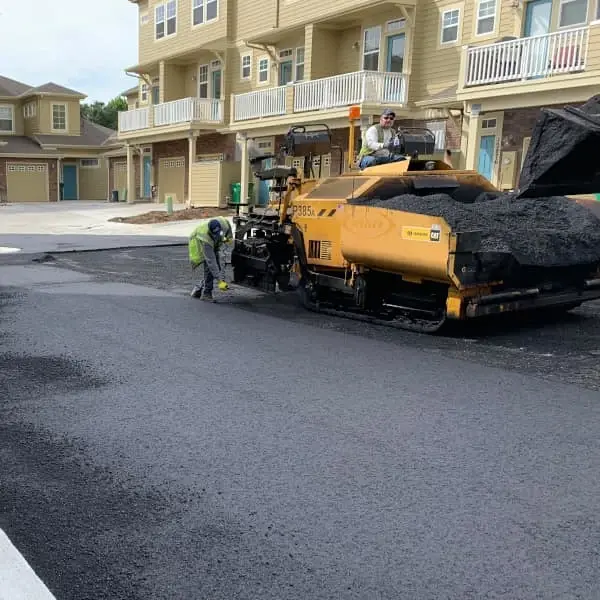

Enright Asphalt repairs cracked, settled, and spalling concrete driveways across Denver and the Front Range. Small cracks left alone in this climate turn into expensive replacements fast. We fix the damage now so your driveway lasts years longer and your home looks the way it should.
We’ve protected Denver driveways and parking lots for over 30 years. We hold an A+ BBB rating and our crews work in this market every day. You get proven repair methods, quality materials, and a team that understands what Colorado weather does to concrete. See all of our residential services to learn how we help homeowners across the Front Range.
Catch Small Damage Before It Gets Expensive
A concrete driveway can last 25 to 30 years with proper maintenance, according to industry data. But Denver’s freeze-thaw cycles cut that number short if cracks go unrepaired. Water seeps into small openings, freezes overnight, and expands by roughly 9%. According to the Portland Cement Association, that expansion generates enough internal pressure to fracture even well-poured slabs from the inside out.
Repairing cracks and surface damage early costs a fraction of full driveway replacement. The longer you wait, the deeper water penetrates, and the more concrete you lose each winter. Regular repair is the most cost-effective way to protect your investment and avoid a five-figure replacement bill down the road.
Protect Your Home’s Value and Curb Appeal
Your driveway is one of the first things visitors and potential buyers see. Cracked, uneven concrete sends the wrong message about how well a property is maintained. A professionally repaired driveway restores a clean, level surface that adds to your home’s curb appeal and protects resale value.
Beyond looks, damaged concrete creates trip hazards for your family, guests, and delivery drivers. Settling slabs and wide cracks are liability risks that grow worse every season. Getting repairs done promptly eliminates those hazards and keeps your property safe.
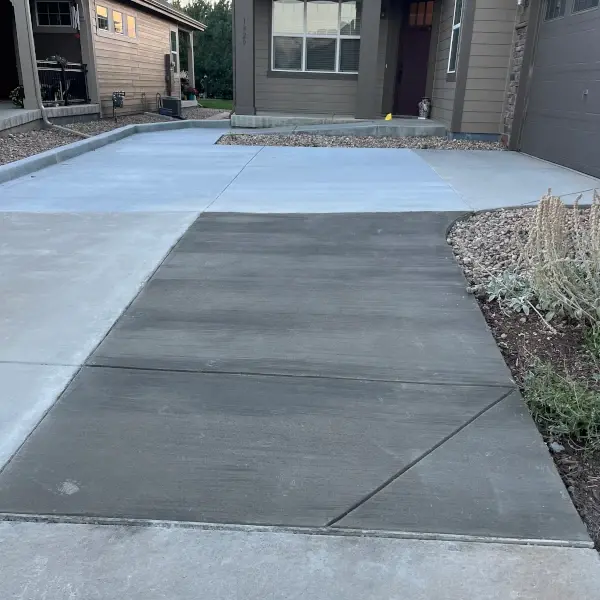
Our Concrete Driveway Repair Services in Denver, CO
We provide complete concrete driveway repair in Denver, including:
- Crack filling and sealing for hairline to moderate cracks
- Spalling and surface damage repair
- Slab leveling and settling correction
- Joint repair and replacement
- Partial slab replacement for severely damaged sections
- Concrete resurfacing and overlay application
- Expansion joint maintenance and caulking
- Post-repair sealing to prevent future freeze-thaw damage
Whether you’re dealing with a few surface cracks or a section that’s settled and pulling away from your garage, our crew delivers durable, cost-effective repairs.
Common Concrete Driveway Problems in Denver
Denver sits at 5,280 feet above sea level. The high-altitude sun delivers intense UV exposure year-round, while winters bring dozens of freeze-thaw cycles. Colorado commonly sees temperature swings of 40 to 50 degrees in a single day. That constant expansion and contraction takes a real toll on concrete surfaces.
Cracking
Freeze-thaw cycling is the number one cause of concrete cracking along the Front Range. Water enters small surface openings, freezes, expands, and widens the crack with each cycle. Research from the Portland Cement Association confirms that trapped water expands roughly 9% when frozen. Over a few Denver winters, that can mean hundreds of rounds of microscopic damage that eventually becomes visible surface cracking.
Spalling and Flaking
Spalling happens when the top layer of concrete peels or flakes away. De-icing salts like magnesium chloride, commonly used on Colorado roads, accelerate this process. Vehicles track salty slush onto your driveway, forcing the concrete to absorb extra moisture right before the next hard freeze. The result is a rough, pitted surface that gets worse each winter.
Settling and Sinking
Denver-area soils often have high clay content. Clay expands when wet and shrinks when dry, creating voids beneath your driveway slab. Over time, sections of concrete sink or tilt, creating uneven surfaces and trip hazards. Poor drainage around the driveway edges speeds up this settling process.
Joint Failure
Control joints and expansion joints are designed to manage natural concrete movement. When joint sealant dries out or separates, water gets underneath the slab. That moisture accelerates soil erosion and freeze-thaw damage below the surface. Replacing worn joint material is one of the simplest and most effective repairs we do.
Repair Options at a Glance
Different damage calls for different solutions. Here’s a quick comparison of common repair methods:
| Repair Type | Best For | Typical Timeframe |
|---|---|---|
| Crack Filling & Sealing | Hairline to 1/4-inch cracks | Same day |
| Spall Repair / Resurfacing | Surface flaking, pitting, rough texture | 1 to 2 days |
| Slab Leveling | Settled or tilted sections | 1 day |
| Partial Slab Replacement | Severely cracked or broken sections | 2 to 3 days |
| Joint Repair & Caulking | Failed expansion or control joints | Same day |
| Full Resurfacing / Overlay | Widespread surface damage on structurally sound slab | 2 to 4 days |
How We Repair Concrete Driveways
Getting a concrete repair right in Colorado means accounting for our altitude, temperature swings, and soil conditions. Here’s our process:
- Inspect the driveway and identify all damage. We check for cracks, spalling, settling, joint failure, and drainage issues. We also look at what’s happening below the surface.
- Clean out all cracks and damaged areas. We remove loose material, debris, and old sealant so the repair bonds properly to sound concrete.
- Address any sub-base problems. If soil has eroded or settled, we stabilize the base before repairing the surface. Skipping this step is why a lot of repairs fail.
- Apply the right repair method for each type of damage. Crack filler for narrow cracks, patching compound for spalls, leveling for sunken slabs, or partial replacement where the concrete is too far gone.
- Finish and seal the repaired surface. We apply a penetrating sealer rated for Colorado’s climate. This keeps moisture from re-entering the concrete and restarts the freeze-thaw clock.
- Final walkthrough with you. We review every repair, answer your questions, and make sure the work meets your expectations before we leave.
That sealer application matters more here than in most climates. Denver’s elevation means stronger UV exposure and more intense freeze-thaw cycles than cities at lower altitudes. Sealing after every repair is non-negotiable if you want the fix to last.
What Affects Your Concrete Driveway Repair Project
No two driveways are the same. Several factors influence the scope and approach of your repair:
- Type and severity of damage (surface cracks vs. structural settling)
- Total area that needs repair
- Condition of the sub-base and drainage
- Driveway age and original installation quality
- Access difficulty and site conditions
- Whether decorative finishes (stamped, colored, exposed aggregate) need to be matched
- Time of year and weather conditions at the time of repair
Every project is different. Call Enright Asphalt at 720-637-4960 for a free estimate so you know exactly what you’re getting into before any work starts.
Frequently Asked Questions
Can cracked concrete be repaired, or does the whole driveway need replacement?
Most cracked concrete can be repaired. Hairline cracks and cracks under a quarter inch wide respond well to professional filling and sealing. Larger cracks or sections with deep structural damage may need partial slab replacement. A full concrete driveway replacement is usually only necessary when damage is widespread and the sub-base has failed. We’ll tell you the most cost-effective option during your free estimate.
How long do concrete driveway repairs last in Denver?
Properly done repairs with quality materials and a penetrating sealer typically last 5 to 10 years in Denver’s climate. The key is addressing the root cause, not just the surface symptom, and sealing after every repair to limit moisture penetration during freeze-thaw cycles.
When is the best time of year to repair a concrete driveway in Colorado?
Late spring through early fall is ideal. Concrete repair materials need temperatures above 40 degrees Fahrenheit to cure correctly. We typically schedule concrete repairs from April through October to get the best results. Emergency repairs can sometimes be done outside that window depending on conditions.
Does Enright Asphalt repair stamped or decorative concrete driveways?
Yes. We repair stamped, colored, and decorative concrete surfaces. Matching the existing finish takes skill and experience, and our crew has been doing this work in Denver for over 30 years. We’ll discuss finish-matching options during the estimate.
How do I prevent my concrete driveway from cracking again after repairs?
Sealing the surface every 2 to 3 years is the single most effective step. Avoid using calcium chloride or magnesium chloride de-icers directly on your driveway. Keep drainage directed away from slab edges. Address small cracks early before they let water in. These steps can extend your driveway’s life by years.
Is concrete or asphalt better for my driveway?
Both materials work well in Denver. Concrete lasts longer but costs more upfront and is more prone to frost heave cracking. Asphalt driveways are more flexible, handle freeze-thaw better, and cost less to install. We work with both and can help you weigh the options based on your property and budget.
Get a Free Concrete Driveway Repair Estimate in Denver
Don’t let small cracks become big problems. Denver’s freeze-thaw cycles punish damaged concrete every winter. The sooner you repair, the less it costs and the longer your driveway lasts.
Call Enright Asphalt at 720-637-4960 or fill out our estimate form to schedule your free, no-obligation assessment. We’ve been repairing and protecting Denver driveways for over 30 years. We also handle concrete sidewalks, patios, and other concrete services across the metro. We’ll walk your property, explain your options, and give you a clear estimate before any work begins.