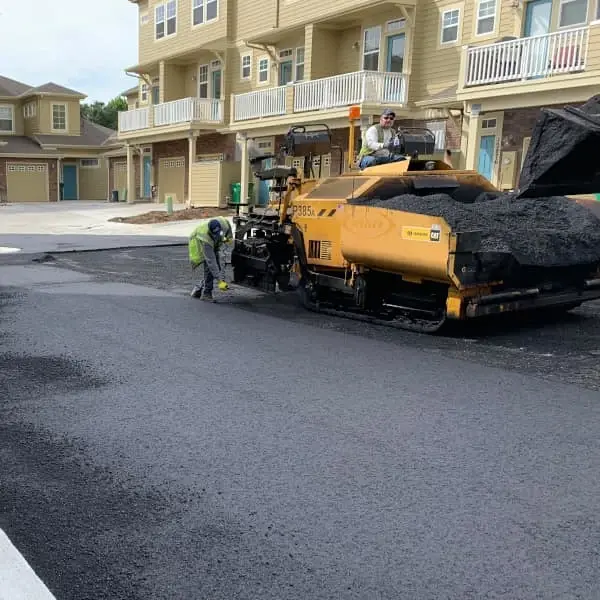

Enright Asphalt provides asphalt overlay and resurfacing services for driveways, parking lots, and private roads across Denver and the Front Range. When your pavement is worn, faded, and cracking at the surface but the base underneath is still solid, an overlay gives you a brand-new driving surface without the cost and downtime of a full tear-out. According to the Asphalt Institute, mill and overlay can be 40 to 50% more affordable than full-depth reconstruction.
We’ve been paving and resurfacing asphalt in the Denver metro for over 30 years. We hold an A+ BBB rating and our crews know how to build overlay systems that bond properly and hold up to Colorado’s freeze-thaw cycles, UV exposure, and temperature swings. Whether you manage a commercial property or want to restore your home’s driveway, we deliver a surface that looks and performs like new.
New Surface, Fraction of the Cost
A full asphalt replacement means demolition, hauling, base rebuilding, and repaving from scratch. An overlay skips most of that work by using your existing pavement as the foundation. You get a fresh hot-mix surface without paying for excavation, new aggregate base, or disposal of old material. For most properties, that translates to significant savings in both cost and time.
Overlay and resurfacing projects also finish faster. Most residential driveways can be milled and overlaid in 1 to 2 days. Parking lots typically take 2 to 5 days depending on size. Compare that to a full replacement, which can take a week or more and leaves your driveway or lot unusable for days longer. Less downtime means less disruption to your home or your tenants’ daily routine.
Restore Your Pavement’s Appearance and Performance
Faded, rough, cracked asphalt drags down the look of any property. A fresh overlay delivers that deep, dark, smooth surface that signals a well-maintained home or professional business. For property managers, a clean parking lot improves tenant satisfaction and reduces complaints. For homeowners, it’s one of the most visible upgrades you can make.
Beyond appearance, resurfacing seals up the surface cracks and minor damage that let water infiltrate your pavement. According to the National Asphalt Pavement Association, overlay resurfacing can reduce pothole formation by up to 60%. That means fewer emergency repairs, lower long-term maintenance costs, and a smoother surface for everyone who uses it.
Our Asphalt Overlay and Resurfacing Services in Denver, CO
We provide complete overlay and resurfacing solutions, including:
- Mill and overlay (milling the damaged surface layer, then paving fresh hot-mix asphalt)
- Direct overlay (new asphalt placed over structurally sound existing pavement)
- Asphalt milling to specified depths (1 to 4 inches) using precision milling equipment
- Tack coat application for proper bond between old and new asphalt layers
- Paving fabric installation as a moisture barrier and crack-reflection retarder where needed
- Base repair and patching of localized failures before overlay
- Transition grading at curbs, garage aprons, drainage inlets, and manholes
- Compaction with vibratory and steel-wheel rollers for maximum density
- Post-cure sealcoating to protect the new surface
Whether you need a residential driveway resurfaced or a multi-acre parking lot overlaid, we scale the job to your property and build it to handle your traffic.
Understanding Your Resurfacing Options
The terms overlay, resurfacing, mill and overlay, and replacement get used interchangeably, but they’re different processes with different applications. Here’s how they break down:
Direct Overlay
A new layer of hot-mix asphalt is placed directly on top of the existing surface. No milling. This works when the current pavement is structurally sound with only minor surface wear, fading, or shallow cracking. The new layer is typically 1.5 to 2 inches thick. It’s the fastest and most affordable resurfacing option, but it does raise the pavement elevation slightly, which matters at garage aprons, curbs, and drainage points.
Mill and Overlay
This is the most common resurfacing method for driveways and parking lots. A milling machine grinds off the top 1 to 3 inches of damaged asphalt, creating a clean, textured surface for the new layer to bond to. After milling, a tack coat is applied, then fresh hot-mix asphalt is paved and compacted. Mill and overlay maintains the original pavement elevation, corrects minor drainage issues, and removes surface damage before covering it. It’s the workhorse solution for mid-life pavement restoration.
Full Replacement
When the base has failed, when alligator cracking covers large areas, or when drainage problems go deeper than the surface, an overlay won’t fix the root cause. Full replacement involves removing all existing asphalt, rebuilding the base, and paving from scratch. It costs more but addresses structural problems that resurfacing can’t reach. We’ll tell you honestly if your pavement needs replacement instead of an overlay
Overlay vs. Replacement: A Quick Comparison
| Factor | Overlay / Resurfacing | Full Replacement |
| Best for | Surface wear, fading, minor cracking on a sound base | Base failure, widespread alligator cracking, severe settling |
| Typical thickness | 1.5 to 3 inches of new hot-mix | 3 to 5+ inches of new hot-mix over rebuilt base |
| Project timeline | 1 to 3 days for most properties | 3 to 7+ days depending on scope |
| Expected lifespan | 8 to 15 years with proper maintenance | 15 to 25+ years with proper maintenance |
| Base work | Existing base stays in place (localized repairs if needed) | Full base excavation, grading, and compaction |
| Cost comparison | 40 to 50% less than full replacement | Higher upfront, longer return on investment |
| Downtime | Minimal, traffic can resume quickly | Extended, driveway/lot unusable during construction |
When Overlay Is the Right Call
An overlay or resurfacing makes sense when the pavement meets these conditions:
- The base and sub-base are still structurally sound (no widespread settling or heaving)
- Surface cracking is moderate, not deep structural cracking or alligator patterns covering large areas
- The pavement has faded, oxidized, or lost its surface texture but the underlying material is intact
- Drainage is functioning properly and the pavement slope is correct
- You want to extend the pavement’s useful life by 8 to 15 years without the cost of full replacement
- The existing asphalt is thick enough to support milling without exposing the base layer
If you’re not sure whether your pavement qualifies for an overlay, we’ll assess it during your free estimate. We check surface condition, base stability, drainage, and thickness to make the right recommendation.
How We Resurface Asphalt in Denver
A proper overlay in Colorado means accounting for our altitude, UV intensity, and freeze-thaw conditions at every step. Here’s our process:
- Evaluate the existing pavement. We inspect the entire surface, check for base failures, test drainage slopes, and measure asphalt thickness. We need to confirm the base can support a new surface before we start.
- Repair any localized base problems. If we find isolated potholes, soft spots, or areas of alligator cracking, we do full-depth patching on those sections first. Overlaying over a failed base just moves the problem to the new surface.
- Mill the existing surface (for mill and overlay projects). Our milling machine grinds off the top 1 to 3 inches of damaged asphalt to a uniform depth. This removes deteriorated material, creates a rough texture for bonding, and maintains the original elevation. The milled material, called reclaimed asphalt pavement (RAP), is hauled to recycling facilities, making asphalt one of the most recycled materials in the country.
- Clean the surface. We sweep and blow all loose debris, millings, and dust from the prepared surface. A clean surface is essential for the tack coat and new asphalt to bond properly.
- Apply tack coat. A thin layer of liquid asphalt emulsion is sprayed across the milled or existing surface. This adhesive layer bonds the new asphalt to the old, preventing delamination. In Colorado’s freeze-thaw environment, a proper tack coat is the difference between an overlay that holds and one that separates.
- Install paving fabric (when specified). For pavement with reflective cracking concerns, we install a paving fabric over the tack coat before the overlay. The fabric acts as a moisture barrier and slows crack reflection from the old surface into the new one. This step adds years to the overlay’s life in a climate like Denver’s.
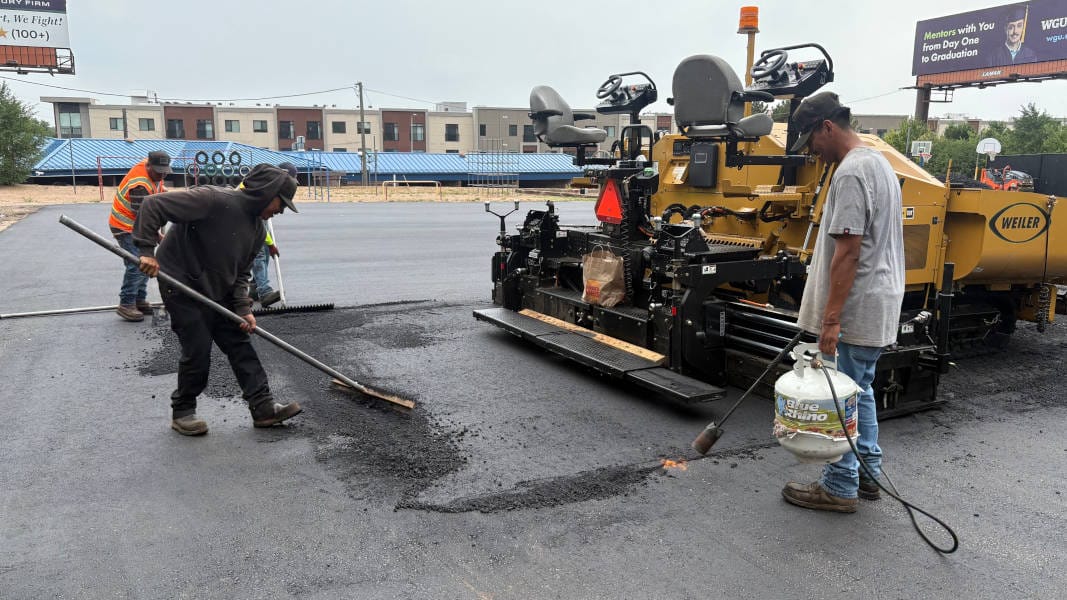
- Pave the new surface. Hot-mix asphalt arrives at roughly 300 degrees Fahrenheit. Our paving machine lays it evenly across the prepared surface, typically 1.5 to 3 inches thick depending on the application. The crew works quickly to place and grade the material before it cools.
- Compact with rollers. Vibratory rollers compress the hot-mix for density, then steel-wheel rollers smooth the surface. Proper compaction is critical, it creates the dense, water-resistant surface that stands up to traffic and weather.
- Grade transitions. We adjust elevations at garage aprons, curbs, manholes, drainage inlets, and sidewalk edges so water flows correctly and transitions are smooth.
- Sealcoat after curing (recommended). After the new surface has cured for 90 to 180 days, a sealcoat application protects it from UV oxidation and moisture. At Denver’s elevation, UV exposure is significantly stronger than at sea level. Sealcoating is the single most effective maintenance step you can take.
What Affects Your Overlay or Resurfacing Project
Every pavement is different. Here are the main factors that influence your project’s scope:
- Total square footage of the area being resurfaced
- Whether milling is required or a direct overlay is appropriate
- Milling depth needed (1 to 3 inches is typical)
- Amount of base repair or patching required before overlay
- Whether paving fabric is specified for crack reflection control
- Transition work at curbs, manholes, garage aprons, or drainage structures
- Overlay thickness (1.5 to 3 inches depending on traffic and application)
- Site access for milling and paving equipment
- Time of year and weather conditions
Every project is different. Call Enright Asphalt at 720-637-4960 for a free estimate so you know exactly what you’re getting into before any work starts.
Frequently Asked Questions
What is the difference between an overlay and resurfacing?
The terms are often used interchangeably. An overlay places new asphalt directly over existing pavement. Resurfacing is a broader term that typically includes milling off the damaged surface layer before paving the new one. Mill and overlay is the most common resurfacing method because it creates a better bond and maintains the original elevation.
How long does an asphalt overlay last?
A properly installed overlay typically lasts 8 to 15 years depending on traffic volume, maintenance, and climate conditions. In Denver, regular sealcoating every 2 to 3 years and prompt crack repair can push an overlay toward the upper end of that range. Without maintenance, expect closer to 8 years.
Can you overlay a parking lot without shutting it down completely?
In most cases, yes. We can phase the work in sections so part of your lot stays open while we mill and pave the other sections. This is common for commercial properties where closing entirely isn’t practical. We’ll coordinate a phasing plan with you before work begins.
How do I know if my pavement needs an overlay or a full replacement?
If the base is solid and damage is limited to the surface layer, overlay is the right call. If you see widespread alligator cracking, multiple areas of settling or heaving, standing water from failed drainage, or if the asphalt is so thin that milling would expose the base, replacement is the better investment. We assess all of this during your free estimate.
Do you mill before every overlay?
Not always. If the existing surface is in decent shape with only minor wear and proper elevation clearance at curbs and structures, a direct overlay can work. But in most cases, milling first is the better approach. It removes damaged material, creates a textured bonding surface, and keeps elevations correct. We recommend milling for the majority of our overlay projects.
What happens to the old asphalt that gets milled off?
It’s recycled. Milled asphalt, called reclaimed asphalt pavement or RAP, is hauled to recycling facilities where it’s processed and used as aggregate in new hot-mix asphalt. Asphalt is one of the most recycled materials in the country. Nothing from your old surface goes to a landfill.
Get a Free Asphalt Overlay Estimate in Denver
Every season of UV exposure and freeze-thaw cycling takes more off your pavement’s surface. Resurfacing now stops the deterioration and gives you 8 to 15 more years of smooth, protected pavement at a fraction of what replacement would cost.
Call Enright Asphalt at 720-637-4960 to schedule a free, no-obligation assessment. We’ve been resurfacing Denver pavement for over three decades. We’ll evaluate your surface, check the base, and give you a clear recommendation and estimate before any work begins.