

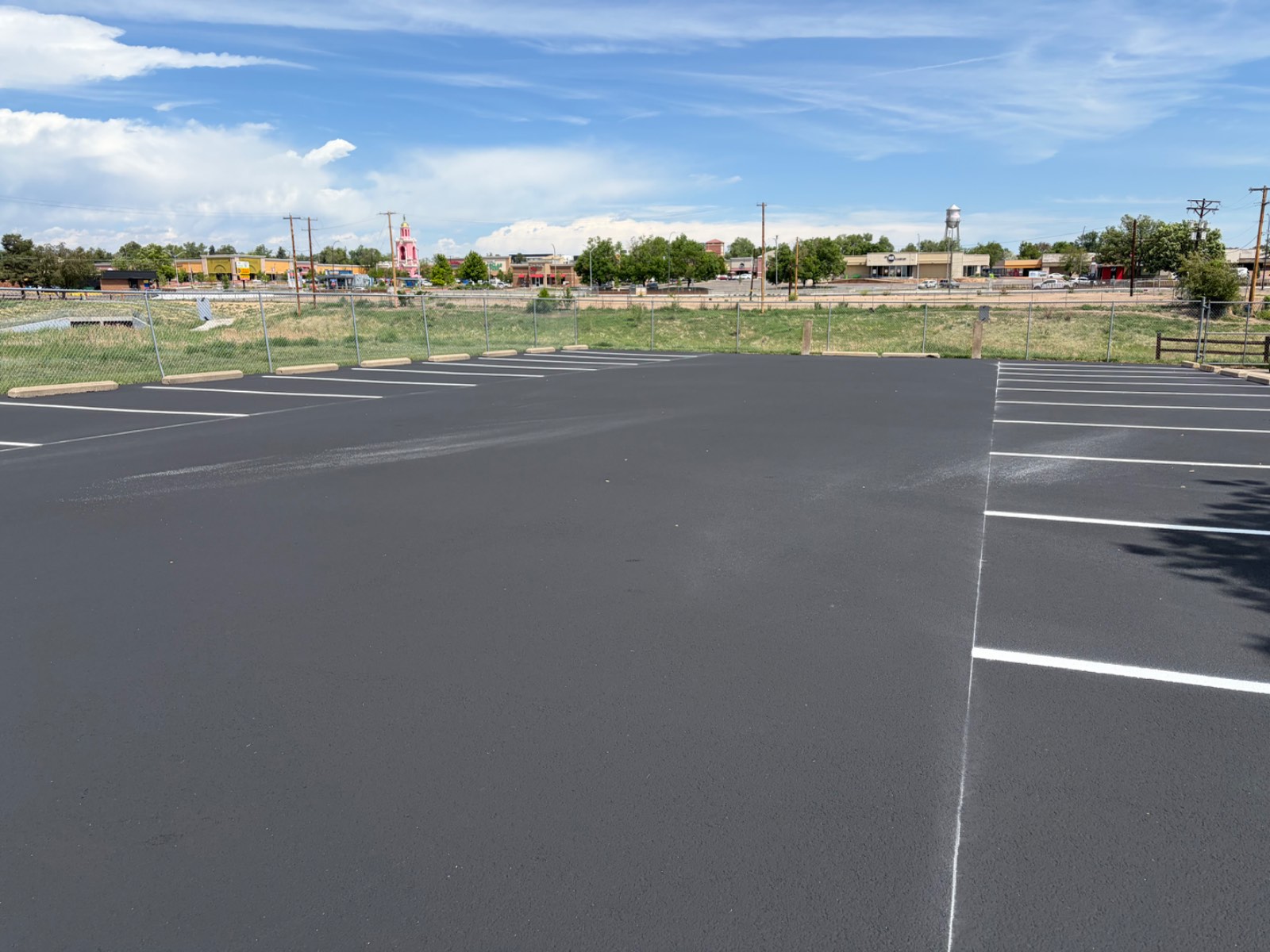
Your Lot Is Aging Faster Than You Think
Look at the parking lot you manage. The cracks that were thin lines last spring are wider now. Maybe a low spot holds water after every storm. You are not imagining it, and you are not behind on maintenance because you were careless. Denver asphalt simply ages faster than asphalt almost anywhere else in the country.
Here is the question we hear most from property managers. Do you sealcoat and protect what you have, or do you actually repair the damage? Get that call wrong and you either waste a sealcoat on a lot that needed structural work, or you let a fixable lot slide all the way into full replacement.
We have spent decades reading Denver pavement, so this guide breaks down sealcoating against every alternative repair, matched to the kind of damage you are looking at and the climate that caused it. By the end you will know which option fits your lot, and which one would be wasted effort.
What Aging Actually Does to Denver Asphalt
Asphalt does not fail all at once. It fails in a sequence, and Denver speeds up every step of it.
Start with the sun. Denver sits at 5,280 feet with more than 300 days of sunshine a year, and that thin-air UV load oxidizes the binder that holds asphalt together. The surface dries out, turns gray, and loses its flex. Once it stops flexing, it starts cracking.
Then comes water, and this is where our climate really does its damage. Only about 21 days a year in Denver stay below freezing around the clock. The rest of the cold season, which runs from October all the way into April, repeats the same loop. Freeze overnight, thaw by afternoon. That pattern can put a lot through more than 100 freeze and thaw cycles in a single year. Every crack is a doorway, so snowmelt seeps in, freezes, expands, and pries the crack a little wider each time. Add daily temperature swings that can top 40 degrees, and a hairline crack in April can be a quarter-inch gap by July.
That sequence is why timing matters so much here. The same lot, left one more winter, can move from a simple fix to a major one.
Sealcoating Is Protection, Not Repair
Here is the thing most people get backward. Sealcoating does not fix damage. It prevents it.
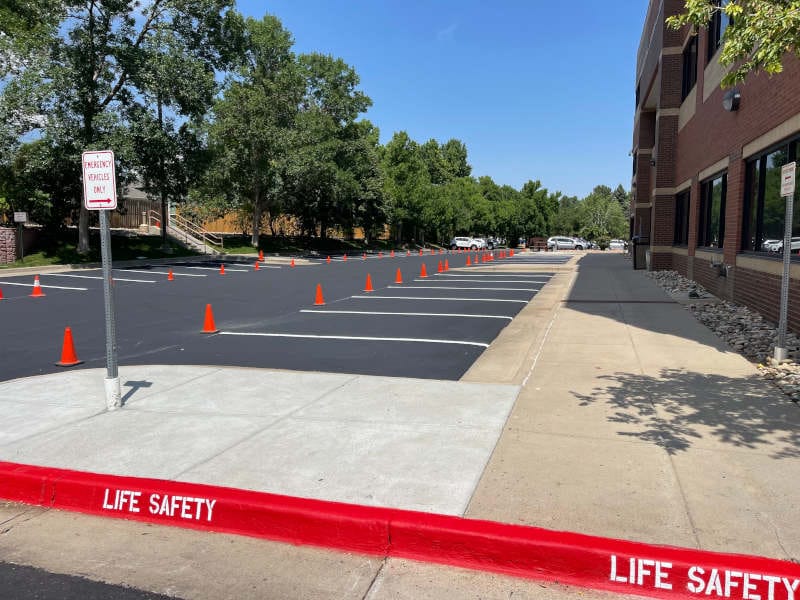
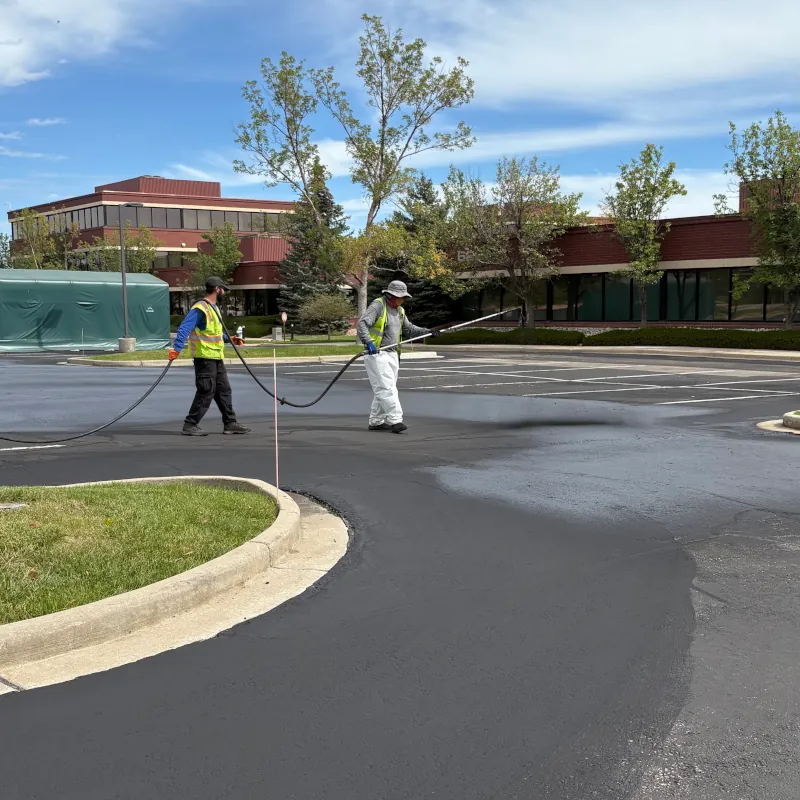
A sealcoat is a thin protective layer we brush or spray over sound asphalt. It blocks UV, seals the surface against water and oil, and restores that dark, uniform look. On a structurally healthy Denver lot, it is the simplest protection you can add, and because of our UV load, we recommend a fresh coat every one to two years. You can read more about why that cadence matters in our sealcoating guide.
But seal over a cracked, crumbling, or sinking lot and you have painted over a problem. The water still gets in. The base still moves. You will be looking at the same failures next spring, now hidden under a fresh black coat. We see property owners fall into this trap every season. Sealcoating looks like a fix, which is exactly why it gets used as one when it should not be.
So when is a real repair the smarter call?
When an Alternative Repair Beats Sealcoating
The right repair depends entirely on how deep the damage goes. Surface, structure, or foundation. Each level calls for a different tool.
Crack Sealing for Early Damage
If your lot has scattered cracks but the surface is otherwise firm, crack sealing is the move. A hot rubberized sealant fills the crack and keeps water out before freeze and thaw can widen it. We schedule this before winter whenever we can, and most lots need it every three to five years. It is the single most effective repair for a lot that is aging but not yet failing. Crack sealing heads off the structural repairs that follow when water reaches the base.
Patching and Full-Depth Repair for Structural Failure
When you see alligator cracking, a web of interconnected cracks, or a pothole, the damage has reached the base. Sealing will not touch it. We cut out the failed section, repair the base, and lay new compacted asphalt. On many of our commercial jobs we use infrared repair, which heats and reworks the existing asphalt into a seamless patch with no cold joint for water to find. This is asphalt repair that restores the actual structure, not just the surface, and it is the right call when failure is contained to specific zones rather than spread across the whole lot.
Overlay and Resurfacing for a Tired but Sound Lot
If the base is still solid but the surface is widely worn, cracked, and faded, an overlay makes sense. We lay a new asphalt layer over the existing one, giving you a fresh, smooth surface without a full tear-out. In Denver, lots usually reach this point around the eight to ten year mark in high-traffic areas. Overlay and resurfacing resets the clock when the bones are good but the skin is shot.
Full Replacement When the Base Is Gone
Sometimes the foundation itself has failed. Large areas have heaved or settled, water pools where it never used to, and patching only moves the problem around. At that point we regrade and replace. It is the biggest job and lasts the longest, and it is the only thing that truly stops underlying movement.
A Side by Side Look at Your Options
| Repair Option | What It Fixes | Best For | Denver Lifespan | When It Is the Wrong Call |
| Sealcoating | Nothing structural. UV and water protection only | Sound lots with minor surface wear | Reapply every 1 to 2 yrs | Any cracking deeper than the surface |
| Crack Sealing | Individual cracks before they spread | Aging lots with isolated cracks | 3 to 5 yrs | Alligator cracking or potholes |
| Patching and Full-Depth Repair | Failed sections down to the base | Localized structural damage | Matches the surrounding lot | Failure spread across the whole lot |
| Overlay and Resurfacing | A worn surface over a solid base | Lots tired on top, sound underneath | 8 to 10 yrs | A failing or unstable base |
| Full Replacement | The entire structure and grade | Heaved, settled, or pooling lots | 15 to 20+ yrs | Anything a smaller repair can still save |
Reading the Damage Before You Choose
You do not need to be a paving expert to make a smart first read. You just need to know what you are looking at.
Thin, separate cracks with a firm surface point to crack sealing. A connected web of cracks or a pothole means the base is involved, so think patching. Widespread surface wear over a lot that still sits level suggests an overlay. And if you see standing water that was not there a few years ago, or sections that have visibly risen or sunk, the foundation is talking to you, and it is usually asking for replacement.
The honest truth is that a lot rarely needs just one of these. A real Denver lot might need crack sealing in the newer section, a patch near the loading dock, and a sealcoat over the whole thing once the repairs are done. The skill is in the sequencing. For the full maintenance picture, our complete guide to parking lot maintenance lays out how these pieces fit together over a lot’s life.
How We Sequenced a Real Front Range Restoration
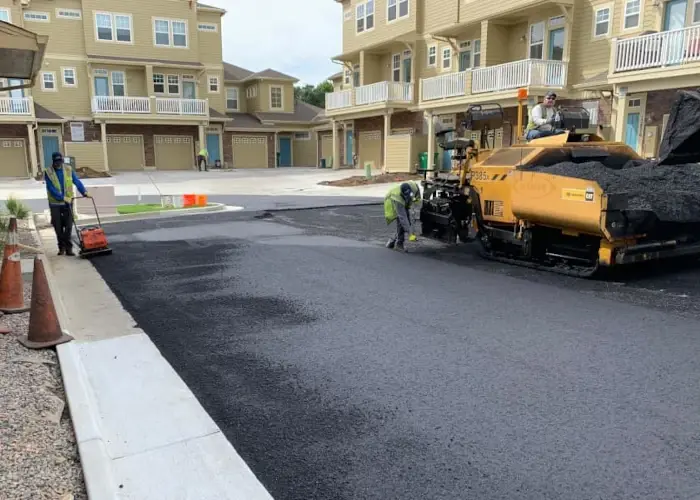
Here is what that sequencing looks like on the ground. Just up the road in the Denver metro, we recently completed a multi-phase parking lot restoration for San Marino Retirement Community in Westminster. Because residents needed parking and building access the entire time, we could not close the lot and work straight through. So we phased it.
We started with concrete, replacing failed drain pans, ADA curb ramps, curbs and gutters, and a concrete apron, about 30 yards of concrete over two days. Then we moved to the asphalt and completed 36 infrared repairs using 6 tons of material in a single day. Only after the structure was sound did we touch the surface. The property holds roughly 72,000 square feet of pavement, and we sealcoated and restriped it in three separate phases, returning the day after each section to stripe before moving to the next.
That order is the whole point. Seal first and we would have locked moisture into failing concrete and asphalt. Repair first, then protect, and the sealcoat actually does its job. You can see the full San Marino project recap for the before and after.
Why Denver Property Managers Call Us
The wrong repair fails twice. Once when you do it, and again when the real problem resurfaces. We have been working Denver and Front Range pavement since 1989, which means the recommendation you get from Enright Asphalt is matched to how asphalt actually behaves at altitude, not a one-size template.
That local read matters more than it sounds. A crew that does not account for Denver’s freeze and thaw load will seal a lot that needed crack work, or repave a lot that a few patches could have saved. At Enright Asphalt, we start with the damage, name the cause, and then match the fix.
Frequently Asked Questions
Can I just sealcoat my old Denver parking lot instead of repairing it? Only if the lot is structurally sound. Sealcoating protects good asphalt from UV and water, but it does nothing for cracks that have reached the base or for a lot that is heaving. Sealing over real damage in Denver’s freeze and thaw climate just hides the problem for one more winter.
How do I know if my cracks need sealing or full repair? Look at the pattern. Thin, separate cracks usually call for crack sealing. A connected web of cracks, often called alligator cracking, or any pothole means water has reached the base, and that needs full-depth repair instead.
How often should a commercial lot in Denver be sealcoated? We recommend a fresh sealcoat every one to two years in Denver because of the high-altitude UV load. A lot’s first sealcoat should go on about 12 to 18 months after new paving, once the asphalt has fully cured.
Is an overlay worth it compared to full replacement? An overlay reuses your existing base, so it is a smaller job than a tear-out when the foundation is still solid. It is the right move for a lot that is worn on top but stable underneath. If the base has failed, an overlay will fail with it, so the condition of the base is what decides this.
What happens if I wait another season to repair? In Denver, waiting is rarely neutral. Each freeze and thaw cycle widens existing cracks and works at the base, so a fixable crack can become a structural repair over a single winter. The simplest version of any repair is almost always the one done sooner.
Do Not Guess at Your Lot’s Next Step
Aging asphalt does not give you a second chance to catch it early. The difference between a simple crack seal and a full replacement often comes down to a single season and a single good decision.
Get a clear read on what your lot actually needs before you commit to the wrong fix. Schedule a pavement assessment with us and we will give you a repair plan matched to your damage and Denver’s climate, not a guess