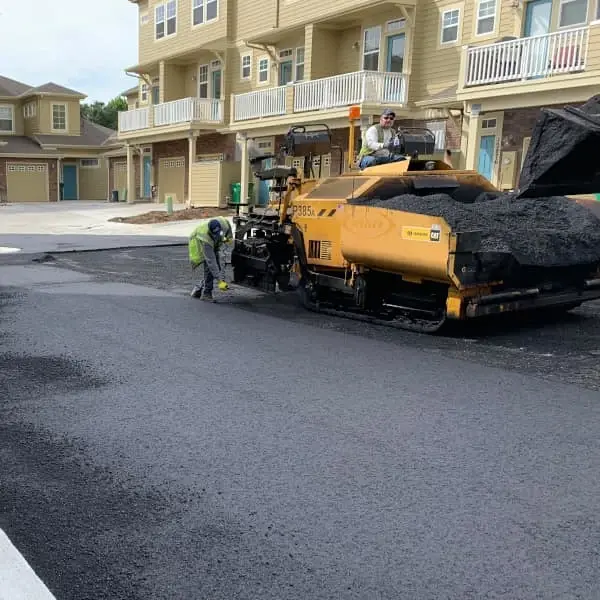

Enright Asphalt provides new construction paving for general contractors and developers building in Denver and across the Front Range. We handle parking lots, access roads, drive aisles, loading areas, and full site paving on commercial, multi-family, and mixed-use projects. Our crews work within your construction schedule, coordinate with other trades on site, and deliver pavement built to spec and on time.
We’ve been paving new construction projects in the Denver metro for over 30 years. We hold an A+ BBB rating. We understand CDOT specifications, local code requirements, and the specific soil and climate conditions that affect pavement design at Colorado’s elevation. When you bring us onto a project, you get a paving sub that shows up when scheduled, communicates clearly, and doesn’t create problems for the rest of your build. See all of our asphalt paving services to learn the full scope of what we deliver.
A Paving Sub That Works the Way You Need
Construction schedules don’t wait for pavement. You need a paving contractor who understands sequencing, can mobilize when the site is ready, and won’t hold up your CO or punch list. We’ve worked with general contractors and developers on projects of every size across the Denver metro. We know how to fit into a larger construction timeline without causing delays.
We also know that callbacks on paving are expensive for everyone. A parking lot that cracks or settles within a year of opening reflects on you and on us. That’s why we don’t cut corners on sub-base preparation, compaction testing, or mix design. The pavement we install holds up because we build it right the first time.
Our New Construction Paving Services in Denver, CO
We provide complete new construction paving services, including:
- Parking lot paving for retail, office, multi-family, and industrial sites
- Access road and drive aisle construction
- Loading dock and service area paving
- Residential subdivision street and driveway paving
- Full site grading and earthwork coordination
- Sub-base installation, compaction, and proof rolling
- Multi-lift hot-mix asphalt paving (base course and surface course)
- ADA-compliant ramp and walkway construction
- Curb and gutter installation
- Striping and pavement markings
- Stormwater management and drainage integration
We can scope a standalone paving package or integrate into a larger site development contract. Either way, you get a clear bid, defined timelines, and reliable execution.
Project Types We Handle
We pave new construction across a range of project types along the Front Range. Here’s where our experience runs deepest:
Commercial and Retail
Shopping centers, office parks, medical facilities, and standalone retail buildings. These projects typically require heavy-duty pavement sections, ADA compliance, fire lane markings, and phased paving to accommodate tenant move-in schedules. We coordinate with striping, signage, and landscaping trades to keep the site progressing.
Multi-Family Residential
Apartment complexes, townhome communities, and condominium developments. Parking areas, internal drive aisles, and resident access roads all need to be ready before occupancy. We schedule paving to align with your building completion timeline so you’re not holding up lease-up.
Industrial and Warehouse
Distribution centers, manufacturing facilities, and flex space. These sites see the heaviest loads, truck turning movements, and loading dock traffic. Pavement sections need to be designed accordingly, often 6 to 8 inches of hot-mix asphalt over a heavy aggregate base. We build for the actual traffic these facilities see, not a standard spec.
Subdivision and Residential Development
Streets, cul-de-sacs, and driveways for new home construction. We work with builders and developers to pave base courses during construction and return for final surface courses after heavy construction traffic is complete. This two-phase approach protects the finished surface and gives you a clean product at turnover.
Municipal and Public Projects
Roads, trails, and public facility parking. We’re familiar with CDOT specifications and local municipality requirements. We can provide documentation, compaction testing results, and compliance certifications as required by public project contracts.
Typical Pavement Sections for New Construction
Pavement thickness and structure depend on expected traffic loads, soil conditions, and project specifications. Here are common sections we install in the Denver market:
| Application | Asphalt Thickness | Base Course | Typical Use |
|---|---|---|---|
| Light-duty parking | 3 to 4 inches (2 lifts) | 6 inches compacted aggregate | Office, retail, residential visitor lots |
| Standard commercial parking | 4 to 5 inches (2 lifts) | 6 to 8 inches compacted aggregate | Shopping centers, multi-family, medical |
| Heavy-duty / truck traffic | 5 to 8 inches (2 to 3 lifts) | 8 to 12 inches compacted aggregate | Industrial, distribution, loading areas |
| Residential streets | 4 to 6 inches (2 lifts) | 6 to 8 inches compacted aggregate | Subdivision roads, cul-de-sacs |
| Access roads / drive aisles | 4 to 5 inches (2 lifts) | 6 to 8 inches compacted aggregate | Internal circulation, fire lanes |
These are starting points. We design pavement sections based on your project’s geotechnical report, anticipated traffic, and applicable specifications. If you have an engineer’s pavement design, we bid and build to that spec. If you need us to recommend a section, we can do that based on site conditions and intended use.
How We Execute New Construction Paving
New construction paving has to fit into a larger project timeline. Here’s how we approach it from preconstruction through final punchlist:
- Preconstruction coordination. We review plans, specs, and the geotechnical report. We walk the site with your project manager to understand sequencing, access constraints, and trade coordination requirements. We identify any potential issues with grading, drainage, or soil conditions before mobilization.
- Sub-base preparation. If we’re responsible for sub-base work, we install and compact aggregate base to the specified thickness and density. We verify compaction with nuclear density testing or proof rolling. In Denver’s clay-heavy soils, this step is critical. Clay expands and contracts with moisture, and a poorly compacted base will show up as settling and cracking within the first two years.
- Proof rolling. We run a loaded truck across the prepared base to identify soft spots or areas that didn’t compact properly. Any failures get excavated and rebuilt before paving begins. This is cheaper to fix now than after the asphalt is down.
- Tack coat and paving. We apply tack coat between lifts for proper bonding. Hot-mix asphalt is placed in multiple lifts, typically a base course with larger aggregate for structural strength and a surface course with finer aggregate for a dense, smooth finish. Asphalt arrives at approximately 300 degrees Fahrenheit and must be placed and compacted before it cools below workable temperatures.
- Compaction. We compact each lift with vibratory rollers for density and static rollers for surface finish. Proper compaction is the single biggest factor in pavement longevity. Industry research shows that for every 1% of compaction you don’t achieve, you lose approximately 10% of the pavement’s service life. We don’t guess on compaction. We test it.
- Transitions and tie-ins. We grade smooth transitions at curbs, building entrances, existing pavement connections, and drainage structures. Butt joints where new pavement meets existing surfaces get special attention to ensure grade matching and proper water flow.
- Striping and markings. If striping is in our scope, we lay out parking stalls, fire lanes, ADA markings, directional arrows, and crosswalks per the approved site plan. We coordinate timing so markings go down after the surface has cured enough to accept paint.
- Punchlist and closeout. We walk the finished pavement with your PM to address any items before you close out the project. We provide compaction test results, material certifications, and any other documentation your contract requires.
Building Pavement for Colorado Conditions
Denver’s climate and geology create specific challenges for new construction paving. Here’s what we account for on every project:
- Clay soils across much of the Denver metro swell and shrink with moisture changes. Without proper sub-base thickness and compaction, pavement settles unevenly. Geotechnical recommendations for base depth should be followed closely.
- Freeze-thaw cycling is aggressive along the Front Range. Denver sees 50 or more freeze-thaw cycles per winter. Pavement design has to account for water expansion in the base and subgrade.
- UV intensity at 5,280 feet is measurably stronger than at sea level. Asphalt binder oxidizes faster here, making mix design and timely sealcoating more important for long-term performance.
- Daily temperature swings of 40 to 50 degrees are common, especially in spring and fall. This thermal stress accelerates surface cracking if the mix isn’t designed for flexibility.
- Denver’s dry air affects asphalt curing and compaction timing differently than humid climates. Our crews adjust application rates and compaction schedules accordingly.
- CDOT specifications govern public projects and many private developments in the Denver area. We’re experienced with CDOT Section 400 requirements for plant mix pavements.
What Affects Your New Construction Paving Project
Every project has different variables. Here are the main factors that influence scope and scheduling:
- Total paving area (square footage or tonnage)
- Pavement section design (asphalt thickness, base thickness, number of lifts)
- Whether sub-base installation is included or handled by the earthwork contractor
- Soil conditions and any required soil stabilization
- Drainage and stormwater integration requirements
- ADA compliance work (ramps, truncated domes, accessible routes)
- Curb and gutter scope
- Striping and marking requirements
- Phasing requirements (base course now, surface course later)
- Site access for paving equipment and asphalt trucks
- Coordination with other trades and construction schedule constraints
- Season and weather conditions
Every project is different. Call Enright Asphalt at 720-637-4960 for a bid or to discuss your project scope. We’re happy to review plans, walk sites, and provide detailed proposals.
Frequently Asked Questions
How early in the project should we bring in the paving contractor?
As early as possible. Ideally, bring us in during preconstruction so we can review the pavement design, coordinate with the earthwork contractor on sub-base specs, and plan sequencing. Early involvement prevents conflicts with other trades and avoids last-minute changes that affect schedule and cost.
Do you handle sub-base work or just paving?
Both. We can install and compact the aggregate base, or we can pave on a base prepared by your earthwork contractor. Either way, we verify compaction before we pave. If the base doesn’t meet spec, we’ll flag it before putting asphalt down.
Can you phase paving around other trades on site?
Yes. Phased paving is common on new construction. We often pave the base course early in the project to provide a working surface for other trades, then return to lay the surface course after heavy construction traffic is finished. This protects the final surface and gives you a clean product at turnover.
What time of year can you pave in Denver?
Our primary paving season runs from May through October, when ambient temperatures consistently stay above 50 degrees Fahrenheit. Hot-mix asphalt needs warm conditions to compact properly and achieve target density. We can sometimes extend the season into early November or start in late April depending on weather, but planning for May through October gives the most reliable results.
What documentation do you provide at closeout?
We provide compaction test results (nuclear density gauge readings), material certifications from the asphalt plant, tonnage delivery tickets, and any other documentation your contract or the municipality requires. If the project is governed by CDOT specs, we follow the applicable reporting requirements.
How long does a new asphalt parking lot last?
A properly designed and installed commercial parking lot typically lasts 20 to 25 years with regular parking lot maintenance. That includes sealcoating every 3 to 5 years, prompt crack sealing, and timely repairs. Without maintenance, expect 12 to 15 years. In Denver’s climate, sealcoating is especially important because UV oxidation degrades the binder faster at altitude.
Get a Bid for New Construction Paving in Denver
If you’re building in the Denver metro and need a paving sub you can rely on, we’d like to talk. We’ve been doing this work for over 30 years. We show up on schedule, communicate clearly, and build pavement that doesn’t come back as a warranty issue.
Call Enright Asphalt at 720-637-4960 or fill out our estimate form to start the conversation. Send us your plans and we’ll turn around a detailed proposal. We’re based in the Denver metro and available to walk your site anytime.